Leo Dell’Orco’s Vision for the Future of Armani
For 40 years, Leo Dell’Orco was at Giorgio Armani’s side. Now, as the head of the men’s style office and president of the Armani Group, he has to envision the company’s future after its founder’s passing.
In fashion, death has a meaning all its own. It’s common to talk about great designers who have been gone for decades, commenting on collections that bear their names but are designed by others. It’s an industry that thrives on the past while searching for a path to the future.
With Armani, however, the story is different. Not only did Giorgio Armani pursue projects and ideas for his company to the very end of his life—so much so that even today some of them are only now seeing the light of day—but, in keeping with his celebrated attention to detail, he was imagining what Giorgio Armani would look like without Giorgio Armani.
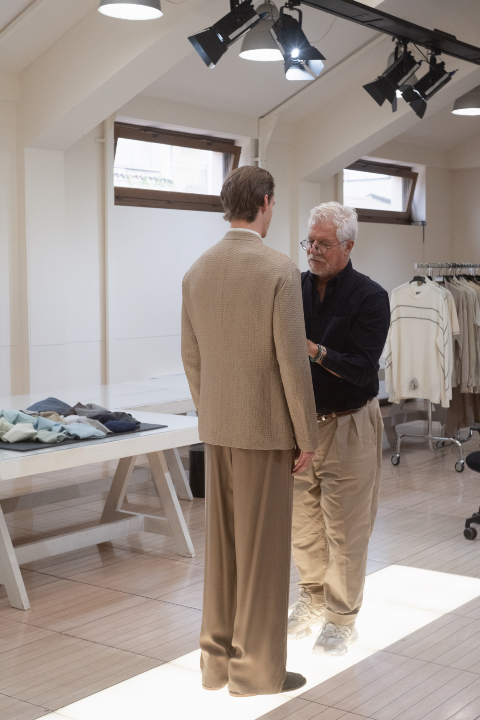
“Every now and then I feel a greater sense of responsibility. But I do what I want to do, what I feel like doing,” Leo Dell’Orco shares with me as we begin our chat in the sunny room used for Giorgio Armani collection fittings.
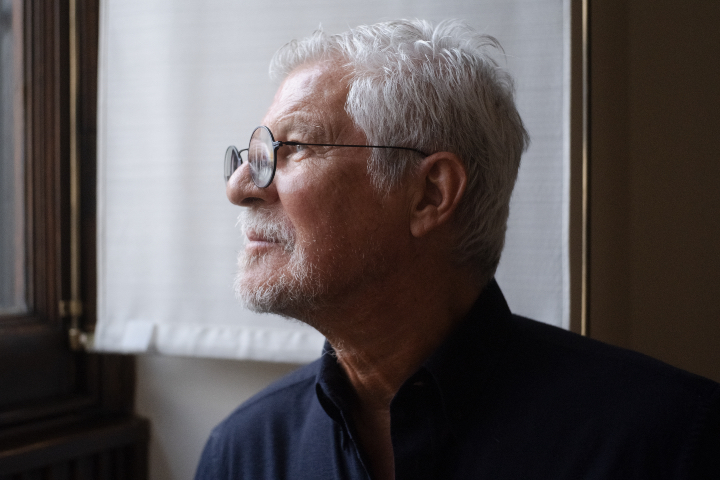
The story of Dell’Orco and Armani’s relationship began decades earlier, in the 1970s to be precise, when the two met in the gardens of Milan’s Piazzale Libia. During a walk, Dell’Orco noticed a dog who appeared to be missing its owner. He looked around and ended up finding him: It was Giorgio Armani. From that moment, as they say, the rest is history. Dell’Orco first began working as a model for Armani and then went on to managerial and creative roles for the company’s menswear lines. It was such a close relationship that when Armani considered what the brand’s future would look like without him, Dell’Orco was at the center of his vision.
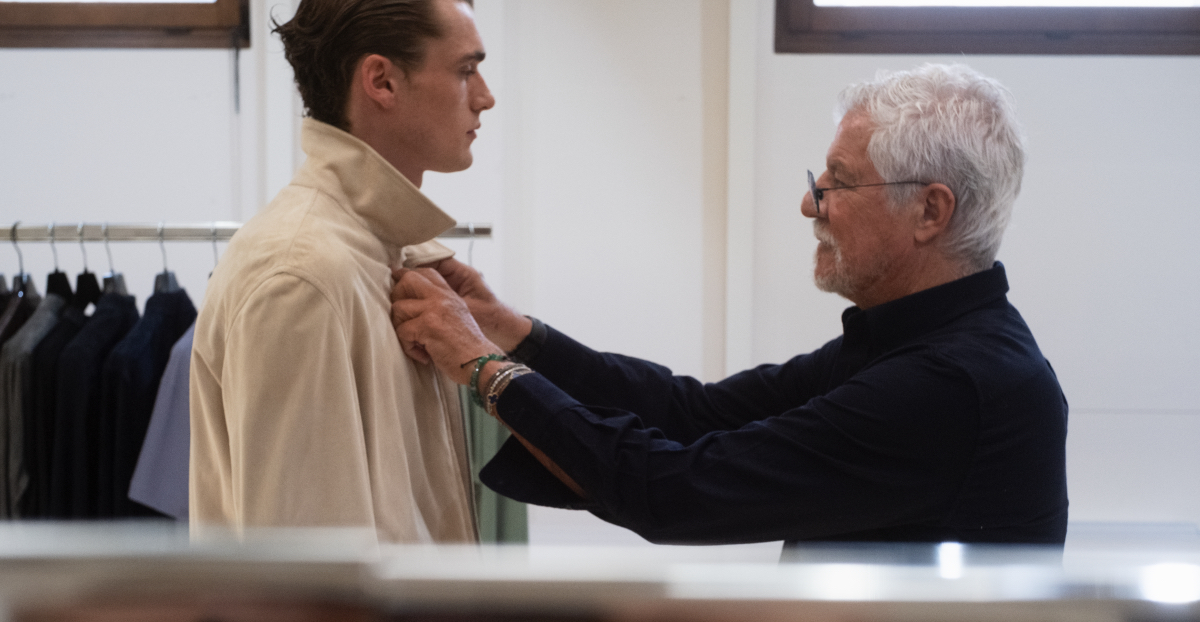
“At first I may have been more hesitant, but now I’m more determined. In a way everything has remained the same—you can feel calm and confident. If you’re calm, you can pass that feeling on to others.” Indeed, Dell’Orco seems extremely comfortable in his new role. Last January he presented his first collection as head of Giorgio Armani’s menswear, while a month later it was his turn at Emporio, where he works alongside Silvana Armani, Giorgio’s niece, who, on her own, leads the main brand’s women’s and Privé collections.
His debut was a success and seen as proof that Dell’Orco is the right person to lead Armani in this new and complicated phase of its history.
“Getting used to this role isn’t easy, but now it makes me feel good and happy. Among the people close to Giorgio I used to be the most critical of the work; now I have to be critical of myself,” Dell’Orco tells me when we talk about this turning point in his career. “Spending 40 years alongside someone like Giorgio teaches you a lot, which is why I was confident about my first solo show. That said, I’ve never been someone who likes to be in the spotlight, but I realized that if it had to be done, it had to be done,”
“As in this case,” I interject, making him laugh.
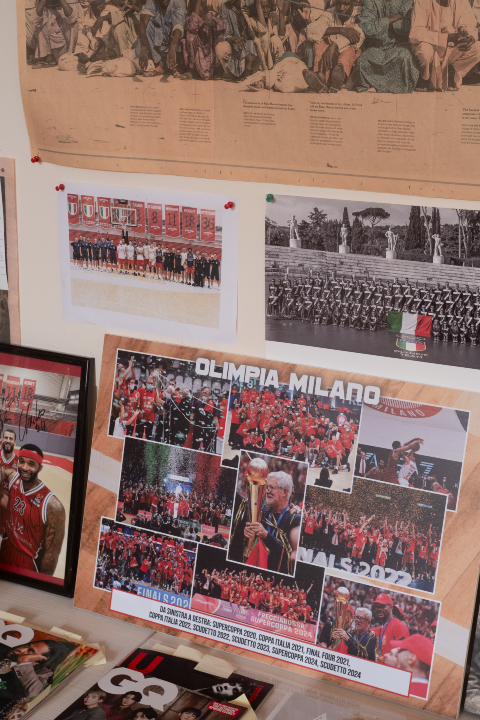
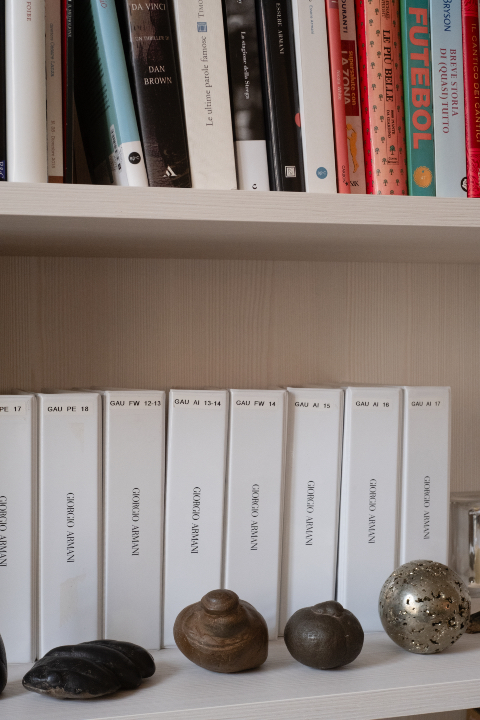
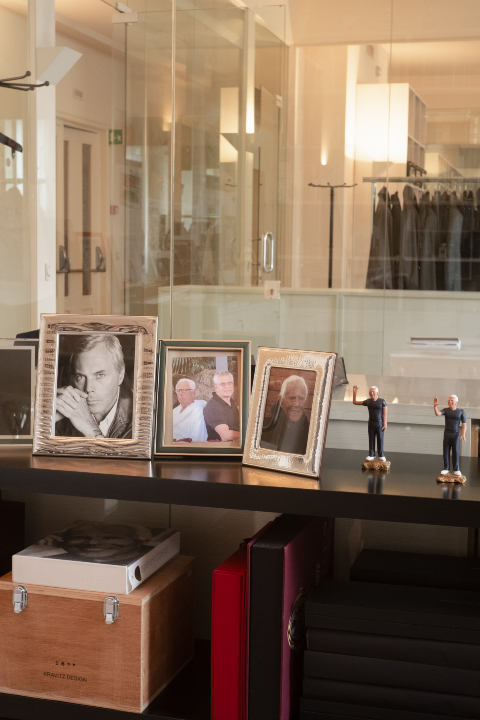
Since taking the reins of the Armani Group, this is one of the first times that Dell’Orco has given someone a look at his new daily routine. Before we sat down for our conversation, I had a chance to look around his office, a sort of vault with transparent walls where he keeps 40 years of personal and professional memories. Alongside hundreds of books on topics ranging from fashion to design, and spanning genres from novels to catalogs of past collections, there are photos of him with Armani, posters from the Olimpia Milano basketball team along with many autographed basketballs, and countless CDs. When I entered, the speakers of a small iPod player, positioned on one of the shelves behind the desk, were playing a song by Canadian musician Ashley MacIsaac at a moderate volume.
I like to think that somehow that collection of objects of all types and sizes is a small summary of Armani’s story. It’s a tale centered on clothes, of course, but also the different passions and worlds that have fueled the brand over the years. When we talk about menswear, it’s almost impossible to imagine what men’s fashion would look like today without the contributions of Giorgio Armani and his legacy, which Dell’Orco knows how to handle with great care.
“Right now the key is to look to the past while adding something new. We can work on the masculine structure by focusing on small details, maybe the shoulder and the hips, but without any significant divergence. You’ll never see a skirt in one of our menswear collections, that wouldn’t be our style. But if we’re talking about a particular style of trousers or a certain fitted jacket, that’s something we can do.”
Reflecting the influence of Giorgio Armani and the end of streetwear’s dominance, many men have rediscovered a certain desire for elegance in recent years. We’re not talking about leaving the house in a tuxedo or wearing a suit and tie when headed out to a bar with friends, but that casual formality that is typical of Armani.
“Today men want to be elegant, but in a different way. There is no longer that classic idea of man, but instead a new one, more attentive and decisive, who doesn’t want to make mistakes when getting dressed. Maybe he has become smarter. Even designers have started to tell a different version of masculinity, less polished and more relaxed,” Dell’Orco explains, probably fully aware that this modern man he describes is essentially the one Giorgio Armani has been shaping over the past fifty years.
Whenever I have the chance to talk to someone who knows fashion intimately, who has experienced it in its purest form, free from distractions and background noise, it’s always interesting to find out what we’ve lost as we’ve moved from what were undoubtedly the best years in an industry that has since become something of an obstacle course. Dell’Orco, of course, doesn’t disappoint when I ask him what has changed in the almost half a century that he has been associated with Armani.
“It certainly used to be more fun, you had more freedom to do what you wanted. Now you have to be careful about everything, and if something doesn’t work out, you face the consequences. Very few people can afford to take risks. There’s less room to be daring and experiment, but that’s what we need in order to attract people. There are so many clothes out there, you have to give people the opportunity to choose something different. For example, through color and cut, but without ever overdoing it.”
To avoid making mistakes in these challenging times, Dell’Orco can also rely on the vast archive of garments and ideas that Giorgio Armani always refused to revisit, but which can now serve as the foundations for the company’s creative future.
“I used to say to him, ‘Fuck, everyone copies your jackets and you don’t want to remake them?’ He would reply, ‘No, I won’t!’ But it’s true. The archive is important and we are also seeing that from the interest shown by others,” he tells me, referring to the success of recent exhibitions organized at the Pinacoteca di Brera and the Armani/Silos on Milan’s Via Bergognone. “Slowly we are going through it all and, even when we don’t want to, people make us look at it,” he adds with a laugh.
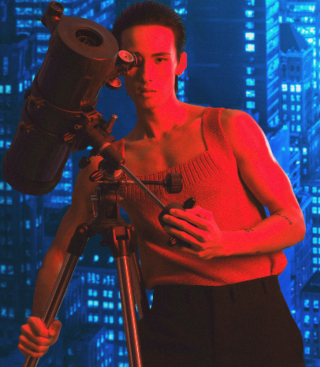
It may be just me, but this newfound relationship with the archive is symbolic of what I like to call a sense of thoughtful newness, a willingness to gradually open up to something never done before. Proof of this can be seen in the latest Giorgio Armani and Emporio Armani collections, as well as the decision to collaborate with photographer Eli Russell Linnetz for the new Armani Archivio campaign, something I wouldn’t have expected to see.
“You have to do it, but without overdoing it. It’s okay to look and take what satisfies and pleases you, don’t do it just because you feel you have to. At the same time, it’s important to observe what others are doing.”
Over the years, however, it has more often been others watching what Armani was doing than the other way around. It’s not that there have been any incidents of plagiarism, rest assured, but more that the 50-year fascination with the brand has led others to closely study each collection. Some have been fortunate enough to build on that interest through collaborations; others have come close.
“We’d thought of doing something with Yohji Yamamoto: he would design Armani’s collection and Giorgio would design Yamamoto’s. It almost happened but then, unfortunately, it fell through. Years later we did something similar with Emporio, collaborating with Our Legacy and Kith.”
“Would you like to do a collaboration with someone else?”, I ask, hoping he’ll share a hint of a future plan.
“I really like Japanese design, maybe Comme des Garçons,” he replies.
Now we all know what to wish for.
Returning to the present moment, the decision to entrust menswear and womenswear to Dell’Orco and Silvana Armani is both a gesture of continuity with the past and a carefully considered revolution in true Armani style. In a world like the fashion industry, which is all too accustomed to dramatic changes in leadership and sudden upheavals, a decision that feels less radical—even expected—can have a surprising effect. That must be why even today rumors continue to circulate about designers with houses of their own in Milan vying to take over the company’s creative direction, while speculation grows over who might acquire the company in the coming years.
A quick recap of the current situation: According to Giorgio Armani’s wishes, from about the beginning of next year, the first 15 percent of the company may be sold to LVMH, L’Oréal, EssilorLuxottica, or a group of similar caliber, with the prospect of selling a further stake of between 30 percent and 54.9 percent in subsequent years. It’s all a distant possibility, but it fuels theories and assumptions about Dell’Orco’s work. He, for his part, choose not to pay much attention to it.
“People are curious; it’s normal for them to talk. We’re fine at the moment and we’ll keep doing what we like to do, hoping others like it too. I’d call it the right kind of fashion. I think Giorgio would like what we are creating. It’s about thinking about our own taste and not pandering to others. But never say never. Maybe in five years we’ll decide to do something different. At the moment we’re all confident when it comes to the direction that we’ve chosen.”
Dell’Orco’s words may seem like they’re stating the obvious, but they’re not. Unlike almost all of its competitors, the Armani Group brands base much of their commercial success on clothes—not just bags and accessories, but jackets and suits. Continuing in this direction is not only a sign of respect to those who work within the Armani world, but also for all those who have fallen in love with it over the years.
“You have to figure out whether you want to focus more on image or on revenue, but without overdoing it in either direction. For example, if at some point wide shoulders become a trend, you can’t pretend you don’t see them, but I’d want to create them in a way I like, not following others. What we have to do is give things a shot, believe in them more, and carry them forward,” Dell’Orco explains, illustrating what he calls the recipe for menswear that is “more real and less conceptual.”
To put this into action, he will be able to count not only on the years he spent at Giorgio Armani’s side and the support of the company he now heads, but also on the huge number of enthusiasts and collectors who continue to follow and support Armani’s legacy and all that follows from it.
After all, as Dell’Orco said during our conversation, Mr. Armani would be happy with what they’re doing.