Inside the Visual World of Alexander Wessely
Alexander Wessely, a multidisciplinary artist, creates fantastical landscapes and scenes, in a blurring of the line between digital art and physical experiences.
You may know his work, even if his name isn’t familiar.
Alexander Wessely is a multidisciplinary artist, director and designer whose practice spans sculpture, scenography, film and live performance. His work blurs the boundaries between digital art and physical experiences, and he has collaborated with artists including Rihanna, Swedish House Mafia, and most recently, The Weeknd.
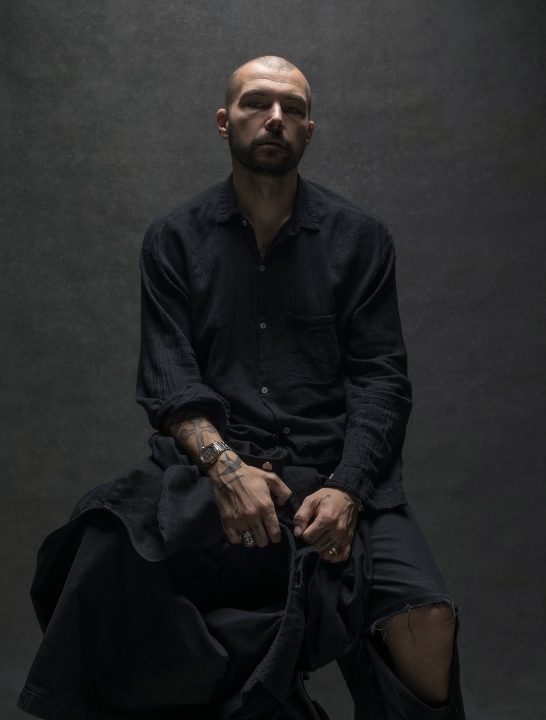
Born in Stockholm in 1989, the Swedish-Greek artist began his creative journey with graffiti before moving into photography and fashion imagery. He assisted fashion photographers and worked on editorial and commercial projects before expanding into music videos, sculpture and creative direction. This diverse background informs his approach today, bringing together influences from fine art, fashion and popular culture to create a visual language distinctly his own.
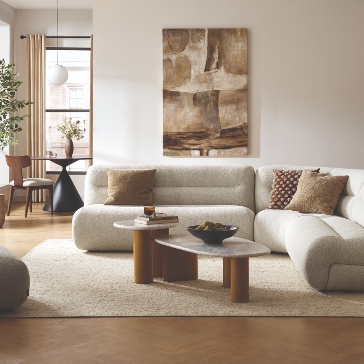
Much of Wessely’s recent work centres on live music and immersive experiences. For example, in 2024, he served as creative director for Anyma’s The End of Genesys residency at the Las Vegas Sphere, where generative visuals and digital environments became integral to the performance. He has also collaborated with Ikea and Swedish House Mafia on the Obergränsad collection, a range of home furnishings designed around music production and listening.
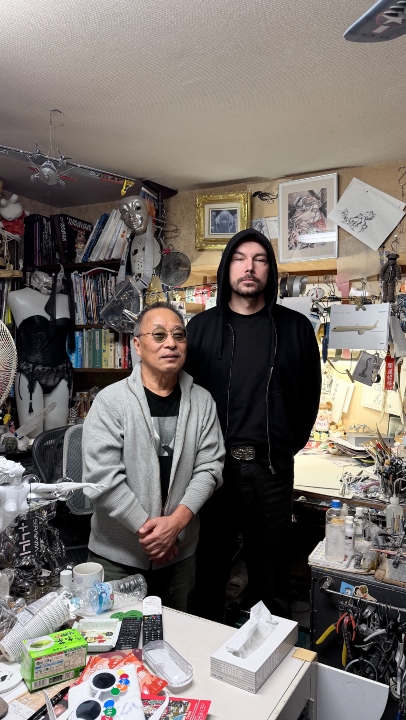
Here, Wessely reflects on sources of inspiration, and how he translates an artist’s vision into an immersive experience for audiences.
You started out painting graffiti in Stockholm before moving into photography, sculpture and scenography. What were you searching for, creatively, during those formative years?
Honestly, nothing that clear. I was a teenager who wanted to make things and have people see them, and walls were the easiest way to do that. After that I kept switching whenever something couldn’t do what I wanted. A camera gave me more control, sculpture gave me weight, and stage design let me build whole rooms people could walk into. Graffiti also taught me something I still use, how a piece reads from far away. A wall has to work from across the street. A stadium is the same problem, just bigger.
Your work now spans several disciplines. What connects them?
Me, I guess. I know that sounds like I’m dodging the question, but I don’t really think in disciplines. I get an idea first and then work out what it should be. Sometimes that’s a sculpture, sometimes it’s a stage for a stadium. What stays the same is the feeling I’m after. I want people to feel small when they walk into a big room, the way I felt as a kid in the Orthodox church I was baptised in. Mostly awe, and at times something closer to existential terror.
You move between the worlds of fine art and popular culture. Do you approach them differently, or do you see them as part of the same practice?
It’s the same practice, but a different job. On a tour I’m working for someone else’s music, so the show has to serve them, not me. In my own work there’s nobody to serve, so I have to be harder on myself. They help each other, though. Touring gives me speed and scale, and the studio slows me back down.
Sculptures often have a physical permanence, while live performances exist only in the moment. What draws you to these two opposing forms of expression?
I think I need both to stay sane. A tour is months of work for something that’s gone the night it ends, so afterwards I really want to make something that’s still there the next morning. Then after a while alone in the studio I start missing the noise and the pressure of a full stadium. They balance each other out. I probably got used to things disappearing early, too. Most of my old walls got painted over pretty fast.
How do you translate an artist’s music, vision and personal experiences into a physical environment that an audience can be part of?
I listen a lot, way more than people think. Usually for weeks, until I start seeing a place. Then I talk to the artist, and the best stuff tends to come from what isn’t in the songs. Where they grew up, what they’re into, what they can’t stand. After that it’s a lot of practical work. Materials, light, how people move through the venue, what it looks like from the very back. The audience shouldn’t notice any of that. They should just walk in and feel like they’re somewhere real.
A stadium show is enormous in scale, yet the experience of every spectator is individual and personal. How do you balance spectacle with intimacy?
You can’t be loud the whole time. If everything is huge for two hours, people go numb after twenty minutes. So you plan the quiet parts as carefully as the big ones. Everything goes dark, one light, one voice, and sixty thousand people suddenly feel like it’s just them and the song. That’s when a stadium turns into a kind of contemporary church. Nobody calls it worship, but from where I’m standing, that’s what it looks like.
What still excites you about creating something new? Is there a boundary you are particularly keen to push?
Working in real buildings. A stadium is a box you fill for a night or two and then empty again. Next March, composer Jacob Mühlrad and I open Gasometer, an old gasholder in Stockholm that’s becoming the Royal Swedish Opera’s home for the next five years. A place like that already has a history, so you can’t just cover it up. You have to work with what’s there, which is harder and a lot more interesting.
Has becoming a father changed the way you work, or what you want your work to say?
It’s made me think more about what I leave behind. I’d like a few things I’ve made to still be around when my kids are my age. They’re also the most honest audience I have. If something’s boring, I know within seconds, and I trust that more than most reviews.
Inspiration often comes from the smallest — and unexpected — places and moments. What is something ordinary that never fails to inspire you?
Patina and light. I love what time does to things, the way paint fades, stone wears down and metal changes colour. Then the light hits it at the right moment, and something you’ve walked past a hundred times suddenly looks completely different. That combination inspires me more than almost anything in everyday life.