Make Room For Life: What Warm Minimalism Brings To the Table
Warm minimalism keeps the
discipline of pared-back design, but
makes room for the mess, texture
and personality of everyday life.
At some point, we’ve all fallen victim to the minimalism trend. There’s a meme that makes the rounds online about a toxic trait: cleaning and tidying the house as if no one actually lives there. The impossibly clean living room, the perfectly placed cushions and throw, the coffee table stacked with books, styled down to the inch.
If it’s just you and perhaps your partner living there, it works. Until life happens. The stress of keeping everything perfectly tidy on top of other life and career demands is more than real.
Rather than just another piece of furniture styled in the living room, the sofa eventually becomes somewhere to relax. The coffee table gathers a few things. The room starts to show signs of the people who live in it. And, in turn, the house becomes a refuge.
It is in this context that warm minimalism emerges as an evolution of classic minimalism. It moves away from the coldness and sterility traditionally associated with pared-back interiors, while retaining a sense of spatial discipline. Our homes make tangible our ideas about what matters and how we want to live. What has changed is how we want minimalism to feel. Increasingly, the answer is warmer, softer and more lived-in.
What Actually is Warm Minimalism?
If traditional minimalism insisted on reduction, the appeal of warm minimalism lies in balance: a space can still be pared back and polished without feeling precious or impersonal.
A cursory glance through our social media feeds probably already reveals some of its familiar traits before we even realise it. Warm-toned wood carpentry, limewashed walls, natural stone surfaces: these are some of its more obvious signatures. Take a closer look and there are other, quieter signs too. A sofa that actually looks like it is meant to be sat on. Books left within reach, somewhat scattered but not untidy. A dining table set up ready to host gatherings, rather than simply looking good.
“Spaces that feel calm, uncluttered, soft and comfortable are, in my opinion, the true character of warm minimalism,” explains Ar. Kelly K Cheah, founder of local architecture and interior design firm K2SD Group.
According to local interior design firm Designed Design Associates (DDA), warm minimalism is popular in Singapore homes because it resolves a tension that many homeowners experience: the desire for a clean, uncluttered interior and the need for a home that feels genuinely warm and inviting.
These are spaces that look the way they do because people actually live in them. Perhaps warm minimalism is less a decorative style than a response to overload. The point is not simply to make a space look calm, but to make it comfortable to inhabit.
Making a Home
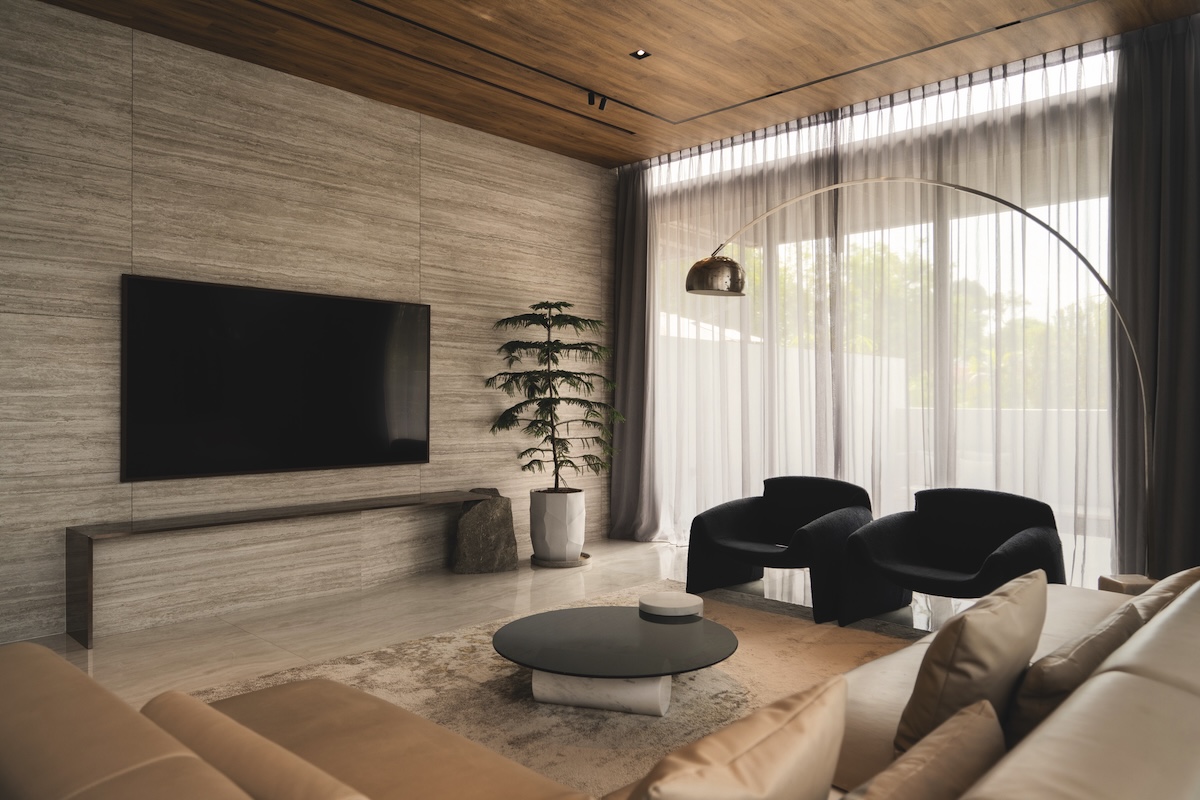
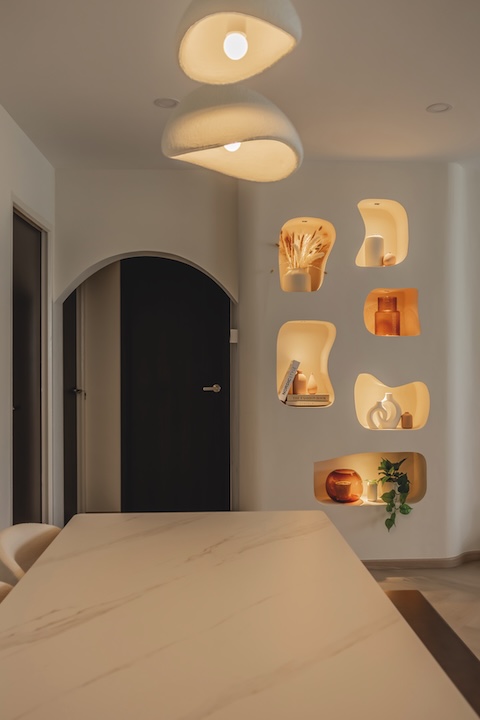
“Warm minimalism is a lot more intentional. When you walk into the house, you can actually tell who lives there,” says Tan Yu Hao, director and founder of local interior design firm Gentlemen Crafts. “Last time, we used to build cabinets first, and clients would fill them up later [to hide things]. Now, the order has flipped. The client decides what they want to show, then we design for it. Maybe one niche to showcase pieces they love, with one soft light on it. The TV wall that used to be a plain laminate panel is now a proper feature,” explains Tan.
That same intentionality extends to the materials themselves. White, beige and grey give way to warmer shades such as ivory, sand and taupe, while wood, stone and textured surfaces add depth to otherwise pared-back rooms. The aim is not to fill a space with more, but to give the few things that remain a stronger presence.
Wood is perhaps the most obvious starting point, with its ability to work across different aesthetics. Different tones create different moods: darker timbers such as walnut and mahogany bring depth, while lighter woods such as oak and ash keep things softer. They do not necessarily need to match. Introducing variation within a restrained palette can keep a room from feeling flat without making it feel busy.
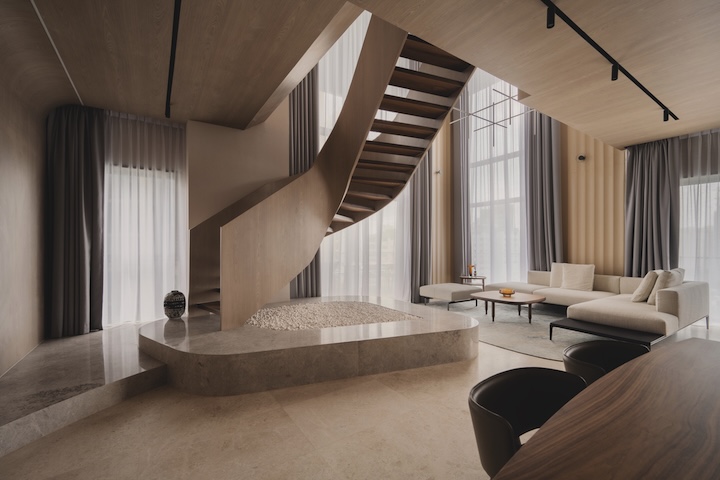
Stone works in much the same way. Cheah explains that she is very much inspired by nature and material, “I love how the natural character of stone and timber, together with the movement of light, can create depth and emotion without the need for excess.”
Marble brings character through its veining, while travertine offers a quieter variation in tone and texture. Engineered quartz, meanwhile, offers durability alongside the look. Used selectively, these materials introduce interest without relying on ornament. Natural materials such as timber and stone can develop marks and patina over time, giving a space a sense of character that a perfectly finished surface cannot.
The idea of restraint does not mean everything has to disappear. “We save a stronger tone or material for one or two spots where you really want the eye to go. Like a display shelf for a client’s pop art or Pokémon collection. Sometimes, they worry it’ll make the house messy, but actually it gives the house personality, as long as it’s the only thing asking for attention,” says Tan.
Lighting plays a similar role. Rather than being treated as an afterthought, it is increasingly considered from the beginning of the design process. Warm white lighting is favoured over cooler tones, which can make even a comfortable home feel clinical. “We also hide the visual noise. Track lights were everywhere a few years ago, now people go for recessed or cove lighting,” Tan adds.
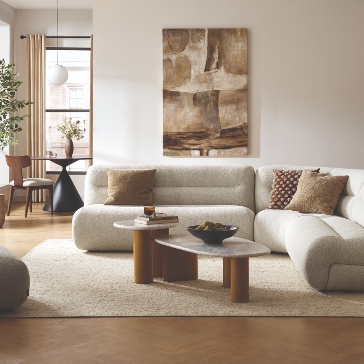
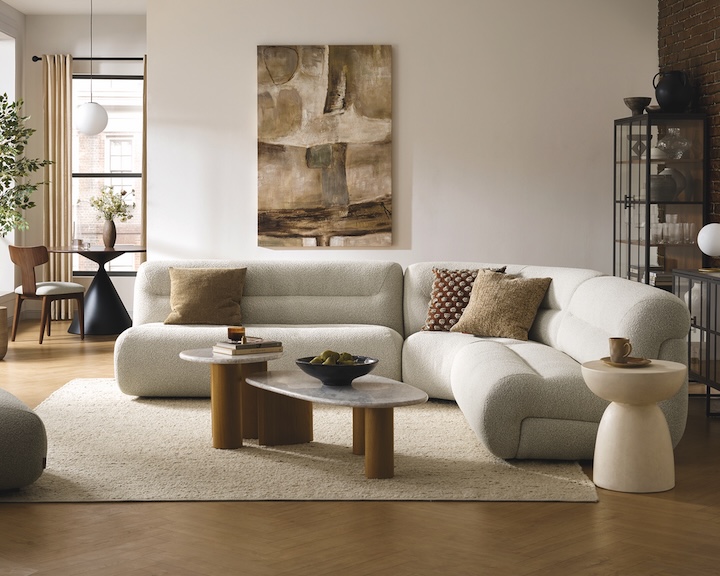
Once the visual clutter is pared back, texture has more room to speak. A rug can anchor a seating area, while a fabric sofa, rattan sideboard or linen curtain brings softness without adding unnecessary decoration. Bouclé, linen and velvet offer different degrees of tactility, while curved furniture and organic forms can soften the hard geometry of a room. A curved chair, soft sofa or generously proportioned armchair can make a space feel more inviting while preserving its sense of order.
The trick is knowing when to stop. Warm minimalism is not about layering more and more elements into a room, but choosing a few that add something meaningful. This is what separates a space that feels considered from one that simply feels cluttered.
Another Way of Living
In the past, with traditional minimalism, one thing people did not always consider was maintenance. “A minimalist house only looks minimalist when it’s neat. The moment things pile up on the counter, the whole look is gone. So a clean-looking house can actually mean more chores, not less,” says Tan.
That is why homeowners increasingly want homes that are easy to maintain. Fewer grout lines mean less to scrub. Colours and finishes that are more forgiving of everyday dirt require less upkeep. Proper storage gives everything a place to go back to. “Because nobody wants to come home every day and realise things get dirty and need cleaning. You just want to come home to relax,” says Tan.
“So if a home looks calm but stresses you out to keep clean, it’s not really minimalist. Calm must be how it feels to live in, not just how it looks in photos.”
A Home That Ages With You
Warm minimalism offers a starting point for creating a home that can outlast preferences and fleeting trends, a place that can evolve alongside the people who live in it. Perhaps that is its greatest appeal: it leaves room for life to happen.
If fashion is a way of expressing ourselves through what we wear, interior design does much the same for the spaces we inhabit. But the best homes are not necessarily those that look perfect at a particular moment. They are the ones that continue to work as life changes, accommodating new routines, new objects and new memories without losing their sense of order.
In that sense, warm minimalism is less about achieving a particular look than finding a way of living with less friction. The spaces we spend the most time in should not simply look good when everything is in its place. They should feel good to return to, too.