The Alpha Algorithm: From Insecurity to Influence
GQ Singapore explores how the manosphere turns male insecurity into influence, how algorithms amplify its reach and what it means for young men who are trying to define masculinity today.
Growing up, Jeggan Rajendram says, masculinity was simple: “the man was the provider”. It was a role he understood without having to question it. So when he considered stepping away from a career spanning more than a decade across companies that included Google and Meta to become a stay-at-home father, he found himself confronting a question he had not expected: Who was he if he was no longer fulfilling that role?
The answer came, in part, through fatherhood. Taking his four-year-old daughter to Sri Lanka for a month, largely as her sole caregiver, gave him the opportunity to see the concept of provision differently. He was still caring for his family, just not in the way he had once understood it.
Today, Rajendram runs Dads & Braids, which holds workshops teaching fathers how to do their daughters’ hair. He describes masculinity differently now, too. It can mean being physically strong while emotionally available, carrying a child for hours while also being able to talk to a daughter about her first period. It can mean knowing how to feed, bathe and care for your children without somebody else having to explain what needs to be done.
His experience offers one answer to a question that has become increasingly difficult to avoid: What does it mean to be a man in 2026?
For some men, the answer can be found in a rapidly expanding online ecosystem of influencers, podcasts, forums and social media accounts that promise to explain dating, money, status and relationships. Collectively, these communities have come to be known as the manosphere.
Its ideas are not entirely new. Anxieties around masculinity, rejection, status and changing gender roles have existed well before the advent of social media. What has changed is the speed at which those ideas can be packaged, distributed and monetised.
At one end of the spectrum are relatively conventional discussions around men’s health, fitness, dating and self-improvement. At the other are communities built around misogyny, rigid gender hierarchies and increasingly toxic ideas about women and society. Between the two is a sprawling commercial ecosystem in which insecurity is leveraged to grow businesses.
The Manosphere Machine

Manosphere ideology compartmentalises social behaviours into an oversimplified system of fixed rules: Men have lost their place in society, women behave according to predictable patterns where status determines the desirability of potential partners and success can be achieved by learning the right tactics.
This results in a commercial ecosystem built around selling men a formula for attaining status, dating and financial success, often packaging insecurity as something that can be solved through dominance or control. Subscribing to this belief system is what is described as “the red-pill effect”. A slew of right- wing podcasters and controversial social media personalities (including some with a history of alleged sexual assault) have popularised these “fringe ideas” to the point that they have entered mainstream discussion.
The ideas have also become increasingly visible in mainstream pop culture. The documentary Louis Theroux: Inside the Manosphere and Netflix’s psychological crime drama TV series Adolescence are two examples of how the entertainment world is taking on the subject of the manosphere. Louis Theroux’s Inside the Manosphere follows the British journalist, author and documentarian as he enters the world of online male influencers, while Adolescence explores the online radicalisation of a teenage boy and the environments in which increasingly extreme ideas can take hold.
As Theroux’s Inside the Manosphere puts it, the movement promises young men “cheat codes to win at life”. The documentary follows Theroux as he enters a world of male influencers whose content spans fitness, wealth, dating, self-improvement and gender politics. Much of the manosphere, the film observes, is populated by relatively mainstream comedians and podcasters. At its more extreme edges, however, those conversations can become increasingly hostile towards women and institutions.
Among the figures featured is Harrison Sullivan, a 24-year-old UK streamer and fitness creator, who describes what he does as teaching young men how to make money and live “outside the system”. Elsewhere, entrepreneur and influencer Justin Waller presents a vision of masculinity in which men must create their own value through wealth, status and usefulness.
The commercial logic is straightforward. Attention becomes followers, followers become community, and community can become subscriptions, courses, products and other forms of monetisation. What begins as a collection of opinions can become an effective business model.
The Algorithmic Rabbit Hole
If the manosphere provides the ideology, the algorithm provides the distribution network.
A young man may begin by watching fitness videos, dating advice or self-improvement content. From there, recommendations can lead him towards videos about male status, gender differences or relationships. More provocative versions of those arguments may then appear alongside them.
Rajendram describes the mechanism in straightforward terms: polarising content attracts attention because people respond to it, whether they agree with it or are angry about it. That engagement can then bring users into communities where they encounter people who reinforce the same worldview. The result is not necessarily a single moment of radicalisation. It can be gradual. An idea appears, then appears again, and eventually begins to feel familiar. But the algorithm does not operate in isolation.
Kavitha and Kester Shekar-Tay, therapists and founders of SACRED Institute, a Singapore-based relationship education platform, argue that the insecurities that manosphere content exploits often predate the content itself. Ideas about what it means to be a successful man are already shaped by family expectations, financial pressures, dating experiences, social hierarchies and traditional ideas about gender.
The internet can then provide a framework through which those experiences are interpreted. While the algorithm may not create the insecurity, it can give existing insecurities a vocabulary, reinforce them through repetition and turn private uncertainty into a shared ideology.
The Red Pill Pipeline

Young men do not encounter these ideas in a vacuum. Family relationships, peer groups and wider cultural expectations all contribute to the way boys understand masculinity. A father may be physically present but emotionally distant. A boy may learn that vulnerability is weakness. He may hear friends making degrading comments about women without anyone challenging them. By adolescence, peers become increasingly influential. The approval of friends, teachers, coaches and other adults can shape what a young person understands to be normal.
Kester Shekar-Tay emphasise the importance of emotional literacy. Anger, for example, is a normal emotion, but young men are not always taught how to identify or deal with the hurt, rejection, embarrassment or insecurity that can sit underneath it. When vulnerability is difficult to express, anger can become the more socially acceptable language.
The manosphere can then offer an explanation for that anger. It can also offer someone to blame. Relationships become questions of power and status. Rejection becomes evidence of a larger system. Women become characters or stereotypes in a “play”, with rules that promise to explain why dating feels difficult.
The consequences of these ideas extend beyond the men consuming them. For women, the normalisation of language that reduces relationships to power, status and sexual value can affect how dating and relationships are understood. Repeated exposure to these ideas can also alter expectations about what men and women owe one another.
Kester Shekar-Tay also point to the role of learned relationship patterns. People do not enter relationships as blank slates. They bring with them the models of love, conflict, gender and power they have observed throughout their lives. That can make unhealthy dynamics difficult to recognise, particularly when the behaviour is familiar. Women who seek therapy may not necessarily identify themselves as being in a “manosphere relationship”. Instead, they may arrive believing that they are the problem, questioning their own judgement or feeling responsible for a partner’s behaviour. Understanding the insecurity beneath harmful behaviour, however, does not remove responsibility for that behaviour.
Heated Chivalry
There is an irony in how the manosphere operates. It sells a vision of sexual prowess and romantic success while advancing ideas about women that can alienate the very people its audience is seeking to attract. “It promotes the idea that the world is essentially a zero-sum game that is stacked against men,” explains Kester Shekar-Tay. “The manosphere doesn’t exist in isolation. You can see it partly as a reaction to feminism, just as feminism developed in response to patriarchy. There is pain on both sides, and society is trying to find some kind of balance.”
For women, however, these ideas can become personal. Social media creative Harmini Asokumar has experienced how behaviours framed as protectiveness or affection can become controlling. “Because those behaviours are often romanticised, especially in dating culture, it can take a while to recognise when you’re actually being controlled.”
She also points to how possessiveness can be mistaken for affection. “There’s also this idea that if a man is possessive, it means you’re desirable or that he’s afraid to lose you. And when you’re dating, it can be quite easy to mistake that intensity for genuine connection.”
Lawyer Shereena Gill describes a similar dynamic, where traditional ideas of male leadership can become entitlement. She recalls being told what she could wear and that marriage would mean giving up work to become a housewife. “Society’s gender roles have embedded it in men’s heads that a woman should submit to a man simply because of his gender, [and not because of his] leadership skills or competence whatsoever.”
Kavitha Shekar-Tay points to the relationship models people grow up with. “If a woman grows up in a household where traditional gender roles are strongly reinforced, those ideas may feel normal.” Safety can complicate that further, she adds. Financial security, physical protection or predictability can feel reassuring to someone who grew up without them, even when other aspects of a relationship are unhealthy.
Another Way to Be a Man
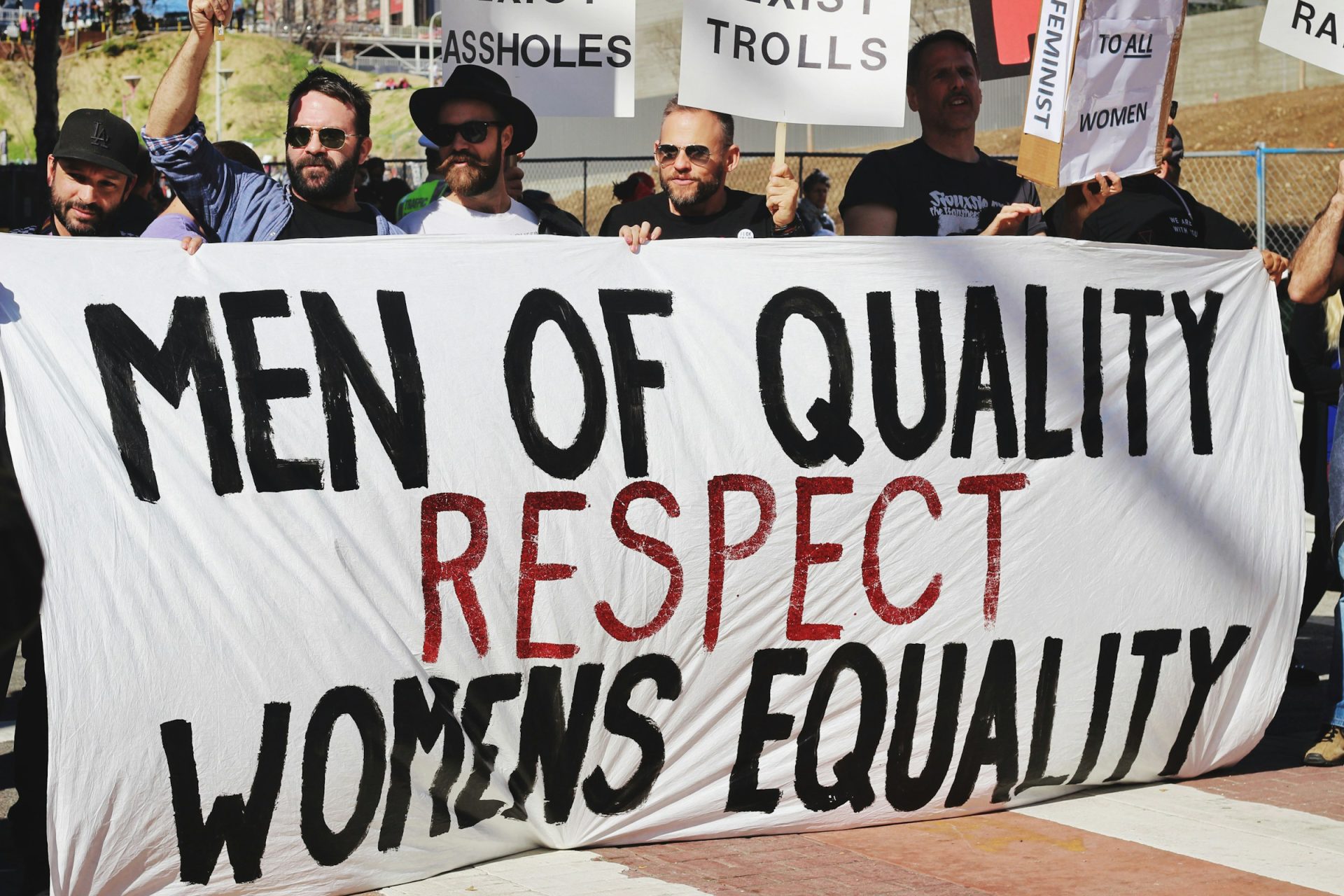
Rajendram’s experience offers a different way of answering the same question. When he stepped away from his career, his understanding of masculinity did not disappear. It expanded.
For him, being a role model is about demonstrating the behaviour he hopes his daughters will eventually recognise as normal. He wants his daughters to grow up expecting a man to be present, respectful, accountable and capable of apologising when he is wrong.
“I hope what they come to expect from a man is someone who’s present, who does the work rather than just talking about it,” he says.
He also recognises the double standard involved. When fathers take on caregiving roles, they often receive praise for doing things mothers have historically been expected to do without recognition. That praise is welcome, he says, but it also reveals how deeply gendered assumptions around childcare remain.
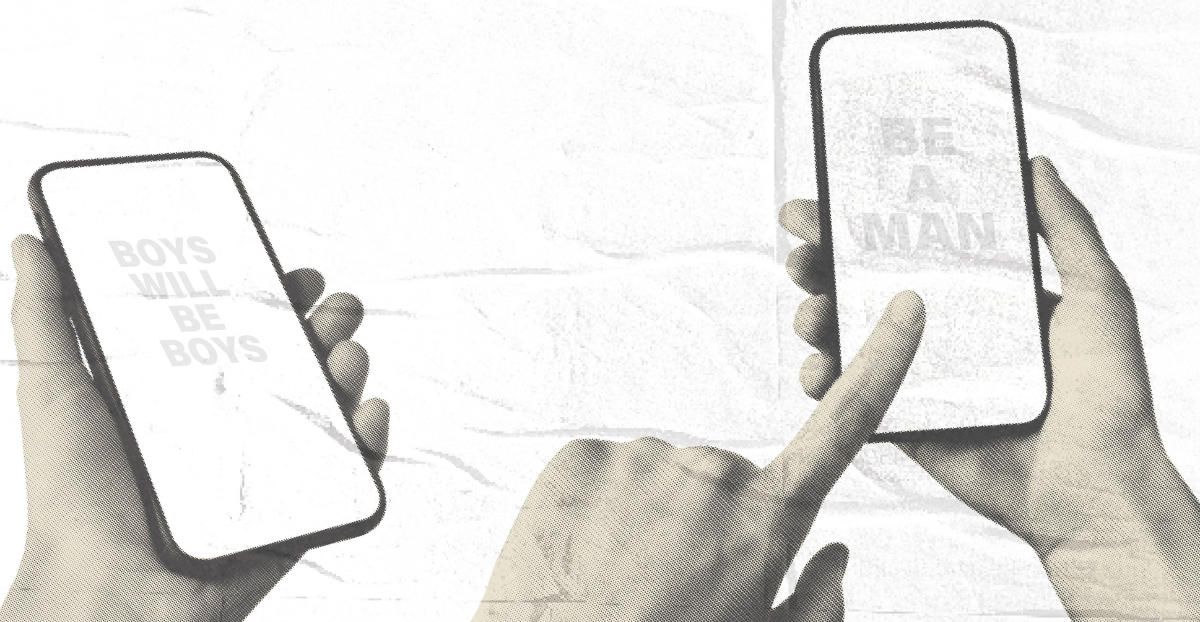
His story sits in interesting contrast to the version of masculinity sold by the manosphere. The latter offers a set of stringent rules: Be wealthy. Be dominant. Be physically powerful. Never appear weak. Learn the rules. Reject the “matrix”. Become valuable.
Rajendram’s experience offers something less rigid. Strength and vulnerability do not have to cancel each other out. Providing does not have to mean only earning. Being a man does not have to mean fitting neatly into one role.
Beyond the Matrix
The internet did not invent male insecurity, loneliness or uncertainty around masculinity. It has, however, given those feelings an infrastructure. Algorithms can identify what holds our attention, influencers can give those anxieties a vocabulary and online communities can turn private uncertainty into a shared sense of identity.
The scale of the problem becomes clearer when looking at how early these ideas can take hold. According to The Children’s Society, 63 percent of young men watch masculinity influencers, while one in three Gen Z boys believe a wife should obey her husband.
For Kester Shekar-Tay, part of the answer to the problem lies in giving young men credible role models and a broader vocabulary for masculinity. “When we repeatedly describe masculinity as ‘toxic’, young men can hear that as a message that masculinity itself is wrong. We need to distinguish between masculinity and harmful behaviours.”
Rajendram found his own answer by stepping into a role he had once understood differently. His masculinity did not disappear when he stopped being the traditional provider. It expanded to include caregiving, emotional presence, accountability and vulnerability.
Ultimately, masculinity does not need to be a fixed set of rules that young men are expected to follow or prove. The internet will continue to tell young men what it thinks they should be. The harder task is making sure they have enough real-world examples, relationships and space to decide for themselves.