The Watches Marking Anniversary Milestones in 2026
2026 marks anniversary milestones for these 12 watches. Beyond a milestone for the brands, they trace the evolution of contemporary watchmaking.
Rolex Day-Date (1956)
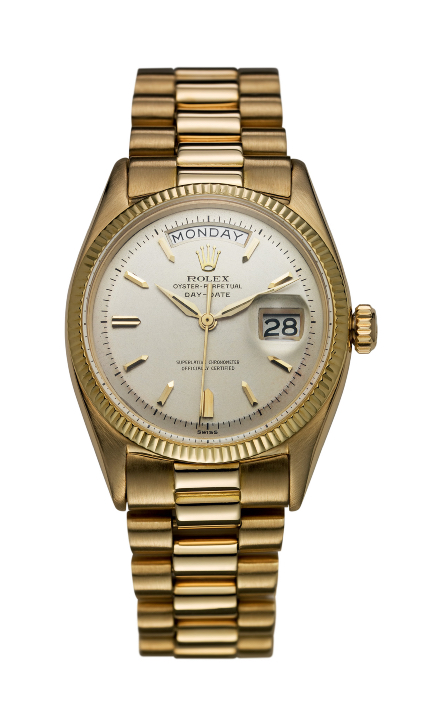
In 1956, Rolex introduced the Day-Date, the world’s first wristwatch to display both the date and the day of the week in full. Its innovative construction meant it was produced exclusively in platinum or 18K gold, establishing its prestigious position from the outset.
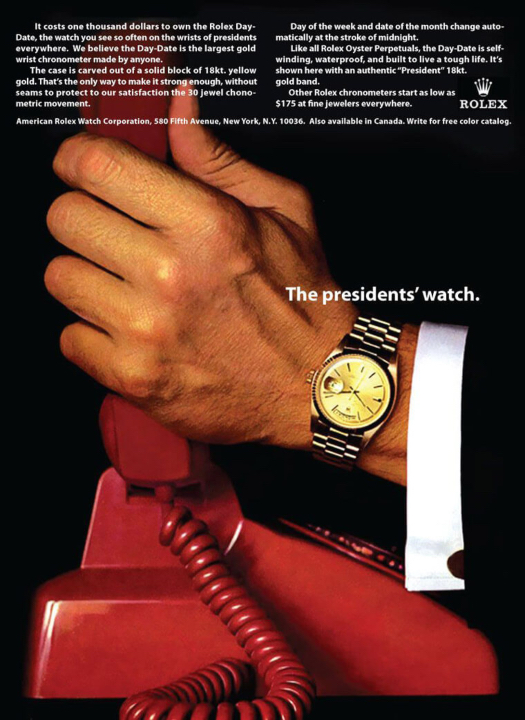
Its nickname, the “President’s watch”, has roots in history: US presidents including Dwight D. Eisenhower and Lyndon B. Johnson were known to wear it. Rolex advertising further cemented the association with power and leadership, famously positioning the watch alongside men who shaped world affairs and introducing the “President” bracelet.
The Day-Date became more than a watch — it became an enduring symbol of status and taste, one of the rare timepieces capable of making an introduction without its wearer saying a word.
To celebrate the Day-Date’s 70th anniversary and 100 years of the Oyster case, Rolex introduces the Oyster Perpetual Day-Date 40 (Ref. 228235JG). This watch is the first to be crafted out of Rolex’s new 18K “Jubilee Gold”, which blends pale yellow, warm grey and pink tones into a subtly luminous finish. The dial carries its own unique pattern, being crafted from natural aventurine, its creamy green tone punctuated by a constellation of sparkle and 10 baguette-cut diamond hour markers.
Powered by the Calibre 3255, it offers a 70-hour power reserve and carries Rolex’s upgraded Superlative Chronometer certification. As a non-catalogue creation, it represents a new chapter in the evolution of Rolex materials, created with the discerning collector in mind.
Rolex Milgauss (1956)
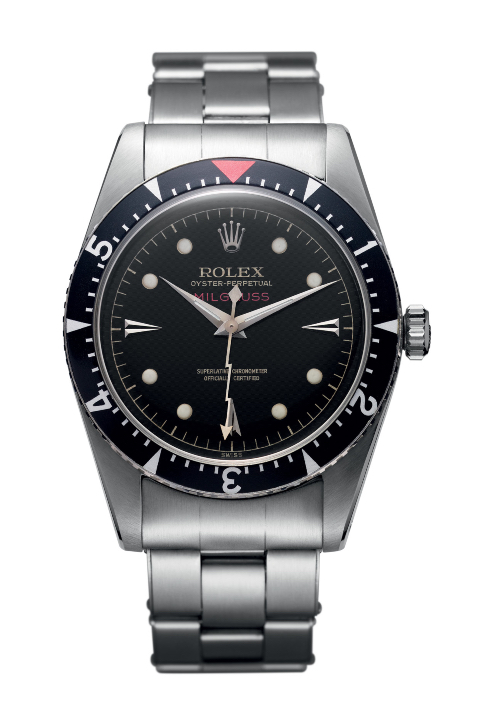
The same year the Day-Date was born, Rolex introduced the Milgauss at the request of scientists at CERN. The first Rolex watch capable of resisting magnetic fields of up to 1,000 gauss, its name combines the French word “mille”, meaning 1,000, with “gauss”, the unit used to measure magnetic fields. At its heart was the Calibre 1080, protected by an inner soft-iron shield designed to prevent magnetic interference from affecting the movement’s hairspring. Its distinctive orange lightning-bolt seconds hand served both as a visual reference to its anti-magnetic capabilities and an enduring design signature.
The Milgauss was discontinued in 1989 before returning in 2007 in a new form. But as new generations of anti-magnetic technology, including silicon hairsprings, became increasingly common, resistance to magnetic fields evolved into a standard feature across many movements. The Milgauss had fulfilled its original purpose. In 2023, after 67 years as a companion to watch enthusiasts, the legendary model was officially discontinued, bowing out as a modern classic and leaving collectors with plenty to remember.
Tudor Prince Oysterdate “Big Block” (1976)
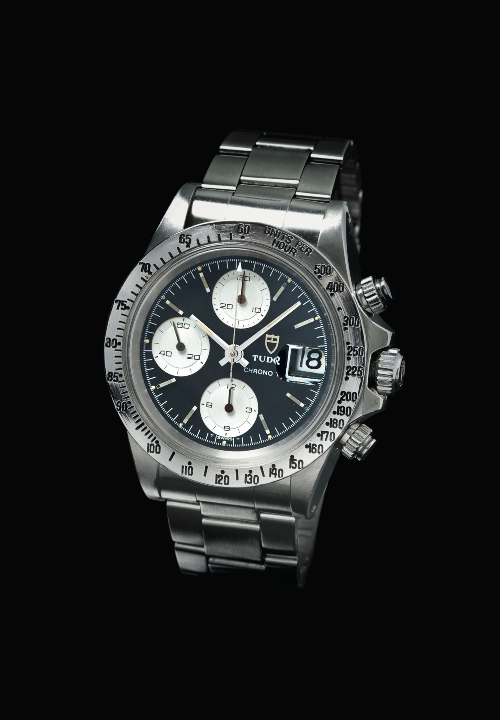
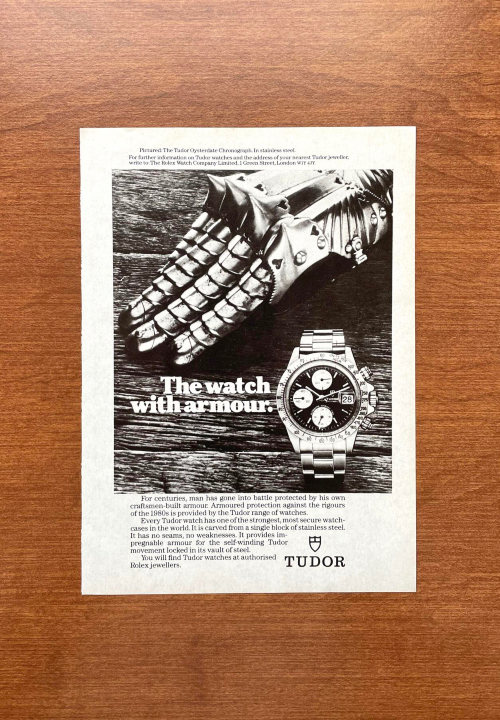
In 1976, Tudor introduced an innovation that would mark an important chapter in its history: the Prince Oysterdate “Big Block” automatic chronograph, the first automatic chronograph produced by the Rolex Group, which arrived more than a decade before Rolex’s first automatic Daytona, the Ref. 16520.
This watch came with an enlarged case, which was necessary to accommodate the automatic Valjoux 7750 movement and its winding rotor, earning the watch its enduring “Big Block” nickname. More importantly, its relatively accessible positioning brought professional chronograph functionality to a wider audience and laid the foundations for Tudor’s motorsport, diving and aviation partnerships throughout the 1980s.
By the 1990s, as Tudor gradually moved away from shared components with Rolex, the Oysterdate name gave way to models such as the Prince Date and Prince Chrono. The thick movement and oversized proportions of the Big Block were eventually replaced by slimmer, more contemporary chronograph calibres.
As Tudor shifted its focus towards the Heritage and Black Bay collections, the brand evolved from accessible tool watches towards a more distinctly retro-sporting identity. The Prince Oysterdate quietly disappeared around the turn of the millennium, marking the end of an era and leaving behind a cult following among collectors.
Cartier Tank Française (1996)
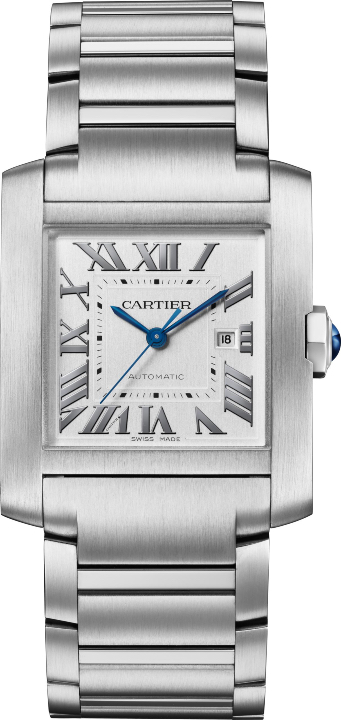
In 1996, Cartier introduced the Tank Française, reinterpreting the Tank collection’s geometric aesthetic through an integrated case and bracelet construction. Inspired by Louis Cartier’s original Tank from 1917, it fused the lugs and bracelet links into a fluid, sculptural form designed to sit closely against the wrist. The watch retained the rectangular case and Roman numeral markers of the Tank while adopting more contemporary, urban proportions, and quickly became one of the defining everyday dress watches of the late 1990s and early 2000s. Its signature details — the concealed crown, railway minute track and bracelet links inspired by tank tracks — gave it a distinctive identity within the Tank family and made it a favourite among celebrities and royalty, including Princess Diana.
In 2023, Cartier gave the Tank Française a comprehensive contemporary update. The latest iteration pushes its integrated design further, with more pronounced curves on the lugs, a crown seamlessly incorporated into the case and cleaner, more fluid lines overall. Seven new models were introduced, including a large stainless-steel version equipped with an automatic movement, giving the enduring French icon a more refined and contemporary expression.
TAG Heuer Monza (1976)
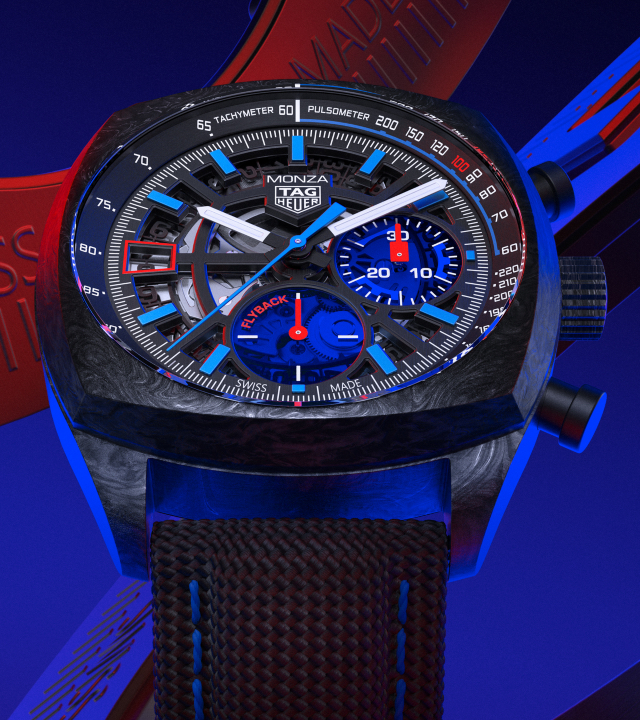
In 1976, to celebrate Ferrari and Niki Lauda’s Formula 1 World Championship victory, Heuer — the predecessor to TAG Heuer — introduced the Monza, its first black-coated chronograph. Inspired by the functional aesthetics of racing dashboards and military equipment, its matte-black dial and red chronograph markings conveyed an unmistakable sense of speed. More than a celebration of racing triumph, the original Monza marked Heuer’s departure from the era of silver dials and helped usher in the age of black-coated sports watches.
Today, TAG Heuer pays tribute to the icon with the Monza Flyback Chronometer, powered by a high-end automatic movement. It retains the signature black DLC-coated case and “panda” chronograph subdials, while taking its racing DNA further with a flyback chronograph function that allows the wearer to reset and restart timing with a single press of a button. Designed with the racetrack in mind, the watch is also officially COSC-certified, delivering a level of precision far beyond that of its predecessor.
Vacheron Constantin Overseas (1996)
When it comes to high-end sports watches, the Vacheron Constantin Overseas is impossible to overlook. Its lineage can be traced back to the 1977 Ref. 222, created to mark the maison’s 222nd anniversary. With its integrated bracelet and clean lines, the watch showcases a distinctive sporty elegance, one that would come to define the collection.
Designed by Dino Modolo, the Overseas officially debuted in 1996. Its bezel bears an an eight-lobed form, an evolution from the 222’s distinctive notched design that was inspired by the Maltese Cross, and this established an instantly recognisable signature. The second iteration, introduced in 2004, took on a more masculine character, while the third version launched in 2016 marked a decisive shift: The bezel was simplified to six lobes, while the proportions became more fluid and the details more refined, to strike a considered balance between sportiness and formal elegance.
The enduring appeal of the Overseas lies in its refusal to be confined to a single style category. It combines robust sporting credentials, including water resistance and anti-magnetism, with the ability to house complications such as a perpetual calendar in a remarkably slim 8.1mm case. That versatility is precisely its charm.
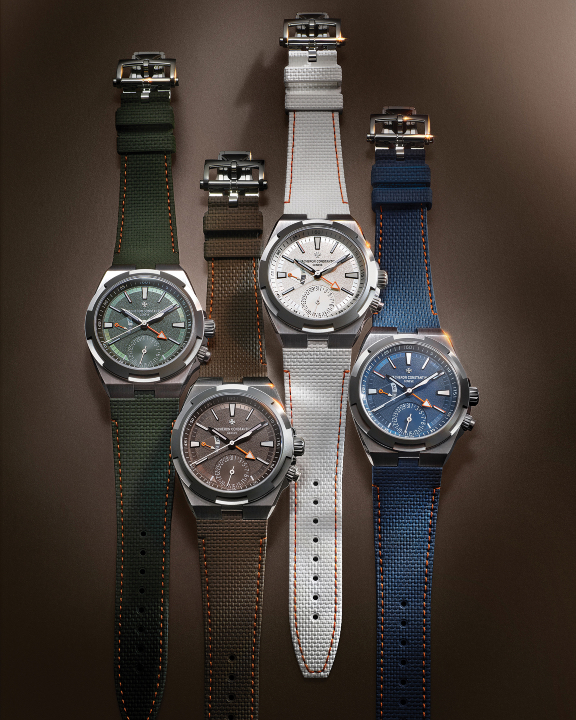
To mark the collection’s 30th anniversary, Vacheron Constantin introduces the Overseas Self-Winding Ultra-Thin. Powered by the new in-house Calibre 2550 ultra-thin automatic movement, the watch measures an astonishing 7.35mm in thickness while retaining 150m of water resistance. Its deep blue sunburst dial, framed by the signature six-lobed bezel. The stainless-steel case and integrated bracelet create a seamless visual flow on the wrist, while the proportions ensure a comfortable fit.
Another standout, the Overseas Dual Time Cardinal Points, is designed with the global traveller in mind. Its most distinctive feature is the marking of the four cardinal directions — north, south, east and west — in vivid red around the outer edge of the dial, lending an adventurous character to the watch while making the time easy to read. Its movement features an independently adjustable hour hand for straightforward operation. The stainless-steel case and bracelet are complemented by three interchangeable straps — steel, rubber and leather — allowing the watch to shift effortlessly with the demands of the journey.
IWC Pilot’s Watch (1936)
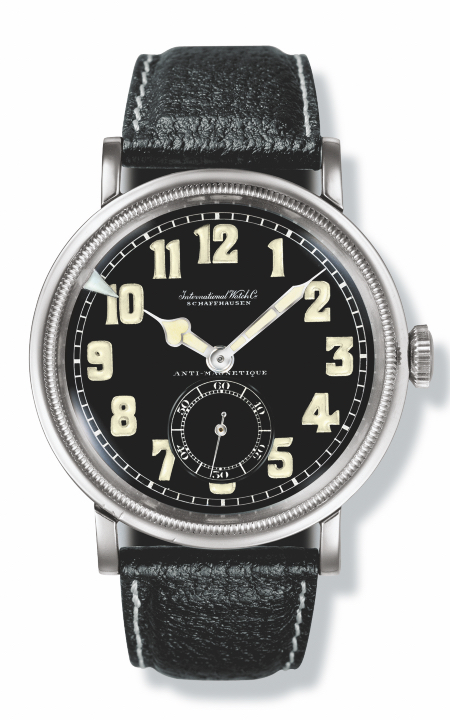
In 1936, the passion for aviation shared by the two sons of IWC’s director inspired the creation of the brand’s first Special Pilot’s watch — the Ref. 436 — also referred to as the Mark IX.. Equipped with an anti-magnetic escapement and a movement capable withstanding temperatures ranging from -40°C to +40°C, it marked the beginning of IWC’s professional pilot’s watch legacy.
However, it was the Mark XI, created in 1948 in response to a British Royal Air Force tender, that truly established the legend. To protect against the powerful magnetic fields generated by radar equipment, IWC enclosed the movement within a soft-iron inner case. A robust crystal and high-contrast luminous dial ensured legibility in a situation when reading the time correctly could determine the difference between life and death.
Its enduring appeal lies in the way it transformed military-grade reliability into the visual language of cockpit instrumentation. The Pilot’s Watch became more than a timekeeping instrument — it became an expression of aviation history.
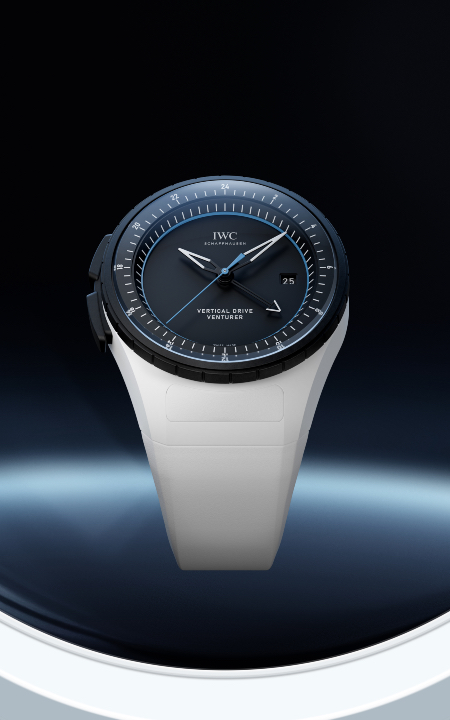
In 2026, IWC takes that Pilot’s Watch DNA beyond the atmosphere through a collaboration with aerospace company Vast, creating the Pilot’s Venturer Vertical Drive, a tool watch designed specifically for human spaceflight. In a radical departure from traditional watchmaking, it eliminates the conventional crown, with all functions controlled through a patented rotating bezel and switch mechanism — solving the challenge of making fine adjustments while wearing pressurised gloves. Its white zirconium oxide ceramic and Ceratanium case are engineered to withstand the extreme temperature fluctuations of space. After 90 years, IWC has taken the pilot’s watch from the skies and into the infinite frontier beyond.
IWC Ingenieur SL (1976)
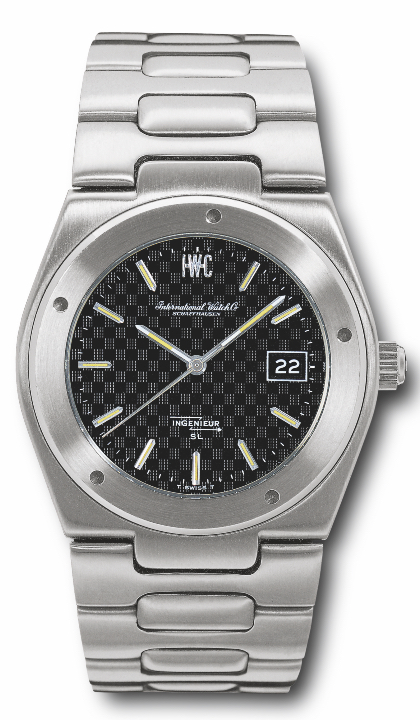
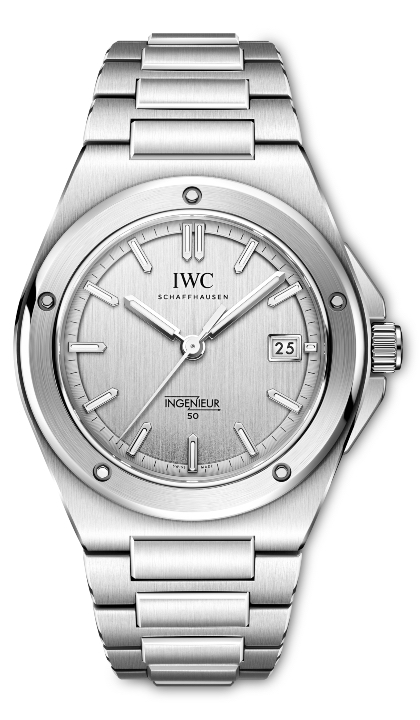
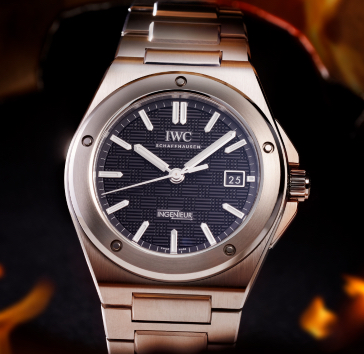
In 1976, amid the combined pressures of the quartz crisis and soaring gold prices, IWC commissioned legendary designer Gérald Genta to reinvent its Ingenieur collection. The result was the iconic Ingenieur SL, defined by its five exposed bezel screws and integrated H-shaped bracelet — which became the blueprint for a new generation of luxury stainless-steel sports watches.
Although only 598 examples were produced between 1976 and 1983 and the model initially saw only modest commercial success, its minimalist geometric aesthetic and rarity eventually attracted collectors decades later, transforming it into one of IWC’s most sought-after designs.
To mark its 50th anniversary, IWC introduces limited editions of the Ingenieur Automatic 40 and Ingenieur Automatic 35, each restricted to a production of only 1,150 pieces. Their defining detail is the replacement of the familiar grid-pattern dial with brushed silver dials inspired by rare examples from the original era. The lightning-bolt motif beneath the “Ingenieur” name has also been replaced by a commemorative “50”.
The 40mm model is powered by the Calibre 32111 and features a soft-iron inner case, continuing the collection’s anti-magnetic heritage from the 1970s. The 35mm version houses the Calibre 47110 and features a transparent caseback. Both retain the five functional bezel screws that remain central to the Ingenieur’s engineering aesthetic.
Chopard L.U.C (1996)
In 1996, Chopard co-president Karl-Friedrich Scheufele made a bold decision: The maison would no longer rely on third-party movements and would transform itself from a fashion-led jewellery watchmaker into a true manufacture. That same year, Chopard’s Fleurier manufacture was established, alongside the debut of its first in- house movement, the L.U.C 96.01-L, named after founder Louis-Ulysse Chopard.
Measuring just 3.3mm thick, the automatic movement featured a 22K gold micro-rotor and twin-barrel architecture, while receiving both COSC certification and the Geneva Seal. It was soon regarded as one of the finest automatic movements produced in Switzerland at the time. The L.U.C 1860 that housed it became the physical embodiment of Chopard’s transformation into a serious force in high watchmaking.
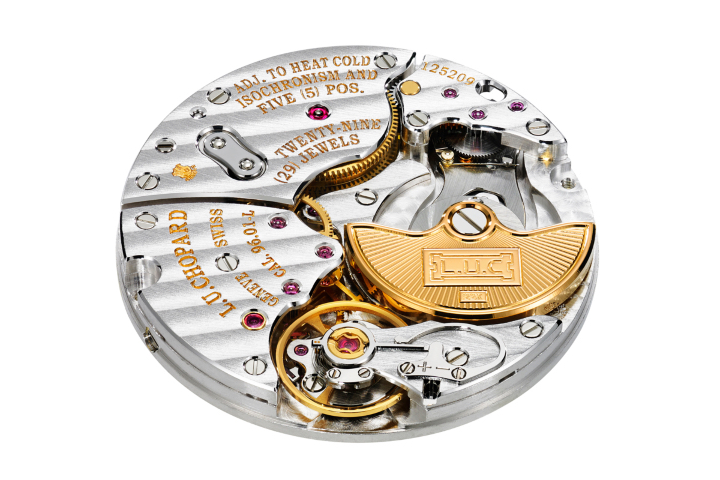
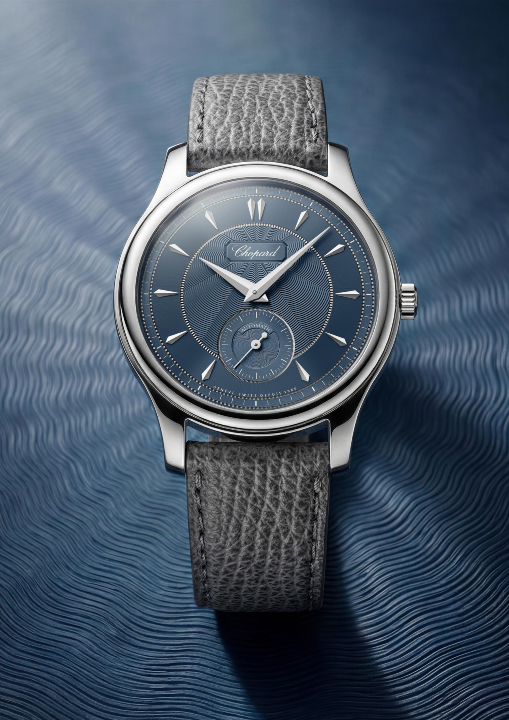
To celebrate the 30th anniversary of the Fleurier manufacture and the L.U.C collection, Chopard introduces a new L.U.C 1860 Chronometer inspired by the original. It faithfully recreates the 36.5mm proportions of the first model, now crafted in the maison’s proprietary Lucent Steel. Its new “Arles Blue” dial takes its inspiration from the shimmering waters of the river of the same name near the manufacture, while artisans use an antique rose engine to hand-engrave its radiating sunburst pattern. Inside is the evolved L.U.C 96.40-L movement — a fitting tribute to the watchmaker’s original vision.
Patek Philippe Nautilus (1976)
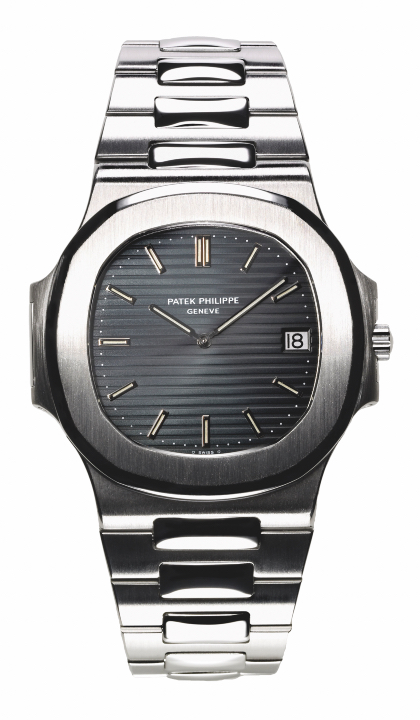
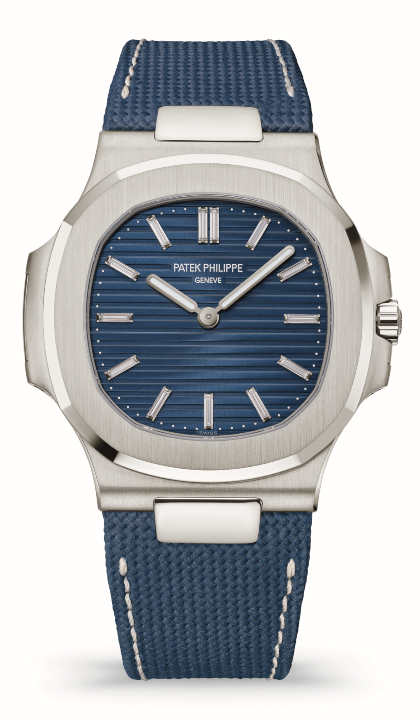
In 1976, as the quartz crisis swept through Swiss watchmaking, Patek Philippe went against the tide, commissioning legendary designer Gérald Genta to create a stainless-steel sports watch “unlike anything seen before”. The result was the Nautilus 3700/1A.
Inspired by the portholes of ocean liners, its distinctive rounded-octagonal bezel and horizontally embossed dial created a new expression of sporty elegance. It blurred the boundaries between sports and dress watches, proving that stainless steel could belong in the world of haute horlogerie. Its famous positioning — that it could be worn with a diving suit or a dinner jacket — perfectly captured its ability to adapt to any occasion and transcend generations, cementing the Nautilus as one of the definitive luxury sports watches of the era.
To mark the Nautilus’ 50th anniversary, the maison introduces the platinum 5810G-001. Measuring 41mm across and just 6.9mm thick, its proportions pay tribute to the original. The blue sunburst dial features the collection’s signature horizontal embossing, while the date window and central seconds hand have been removed, leaving only hours and minutes for a purer expression of the Nautilus aesthetic. It is powered by the ultra-thin Calibre 240, with a 22K gold micro-rotor engraved with “50 1976–2026”. Production is limited to 1,000 pieces.
Parmigiani Fleurier Toric (1996)
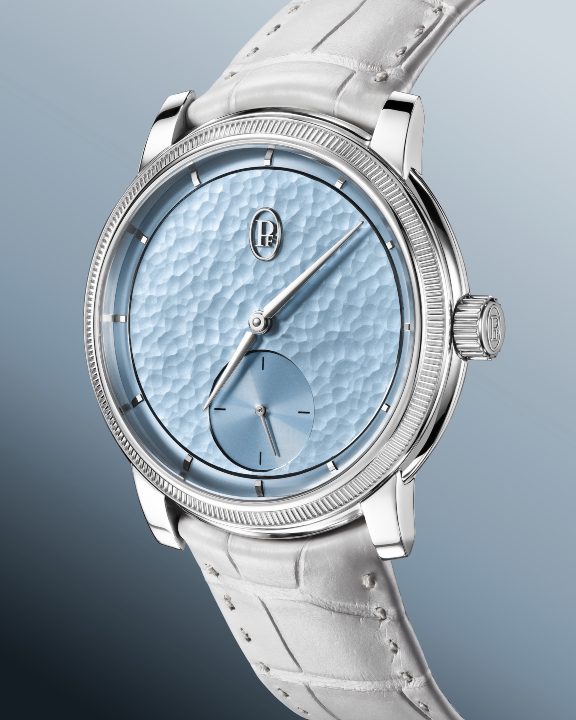
In 1996, master watch restorer Michel Parmigiani founded his eponymous maison, with the Toric becoming its founding creation. Drawing inspiration from the curves of the torus-shaped columns of ancient Greek architecture, Parmigiani defined the case according to the golden ratio and paired it with the collection’s signature hand-knurled bezel. The result was a seamless fusion of classical aesthetics and haute horlogerie craftsmanship.
The Toric’s significance extends beyond its harmonious proportions. It represents Michel Parmigiani’s decades of experience restoring antique timepieces, distilled into an elegant language created for the modern age. It became the starting point for the maison’s philosophy of “Private Luxury”.
To celebrate the 30th anniversary of the brand and the Toric collection, Parmigiani Fleurier introduces a three-piece Toric 30th Anniversary trilogy, united by hand-hammered gold dials. Each dial is individually worked by artisans, creating a subtly irregular texture that catches and reflects the light with warmth and depth.
The trilogy comprises the Toric Chronographe Rattrapante, powered by a high-frequency 5Hz split-seconds chronograph movement; the Toric Quantième Perpétuel, featuring an off-centre subdial display; and the pared-back Toric Petite Seconde. All three feature manually wound gold movements and are limited to 30 pieces each — a fitting tribute to the original creation.
Blancpain Fifty Fathoms Bathyscaphe (1956)
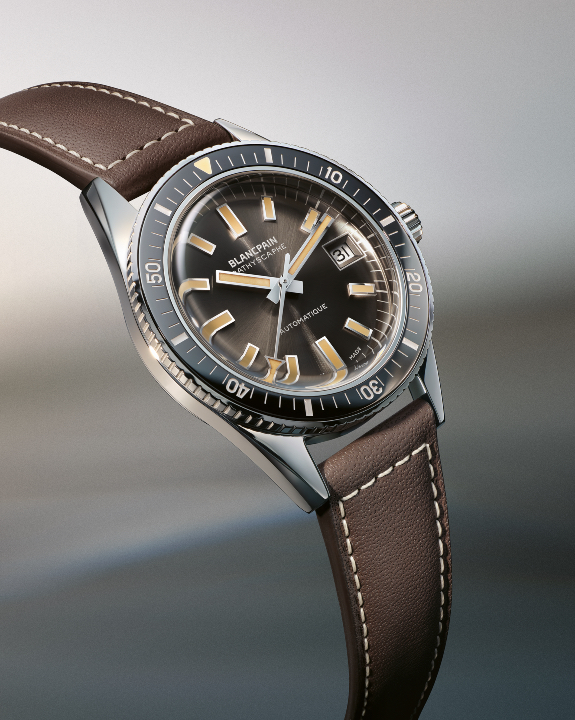
In 1956, as recreational diving was gaining popularity, Blancpain introduced the Bathyscaphe, an everyday counterpart to its professional Fifty Fathoms dive watch, three years after the latter’s debut. Named after the deep-sea submersible designed to descend to the ocean’s greatest depths, the Bathyscaphe embodied a spirit of exploration beneath the surface. It retained the Fifty Fathoms’ professional diving capabilities, but with a smaller case, simplified lines and a slimmer, more refined profile, establishing a new category of lightweight dive watch.
To mark the Bathyscaphe’s 70th anniversary, Blancpain has created a limited edition of 300 pieces inspired by a classic 1968 Bathyscaphe. The new watch recreates the original’s 37.4mm stainless-steel case, paired with a meteorite-grey sunburst dial, baton hands and hour markers filled with vintage-toned Super-LumiNova. A mid-century-inspired Blancpain logo completes the nostalgic aesthetic. Beneath the vintage styling, however, the mechanics are thoroughly contemporary: the automatic Calibre 1150 features an anti-magnetic silicon hairspring and twin mainspring barrels, while a sapphire crystal caseback reveals an open-worked 18K gold rotor inspired by the original Fifty Fathoms.