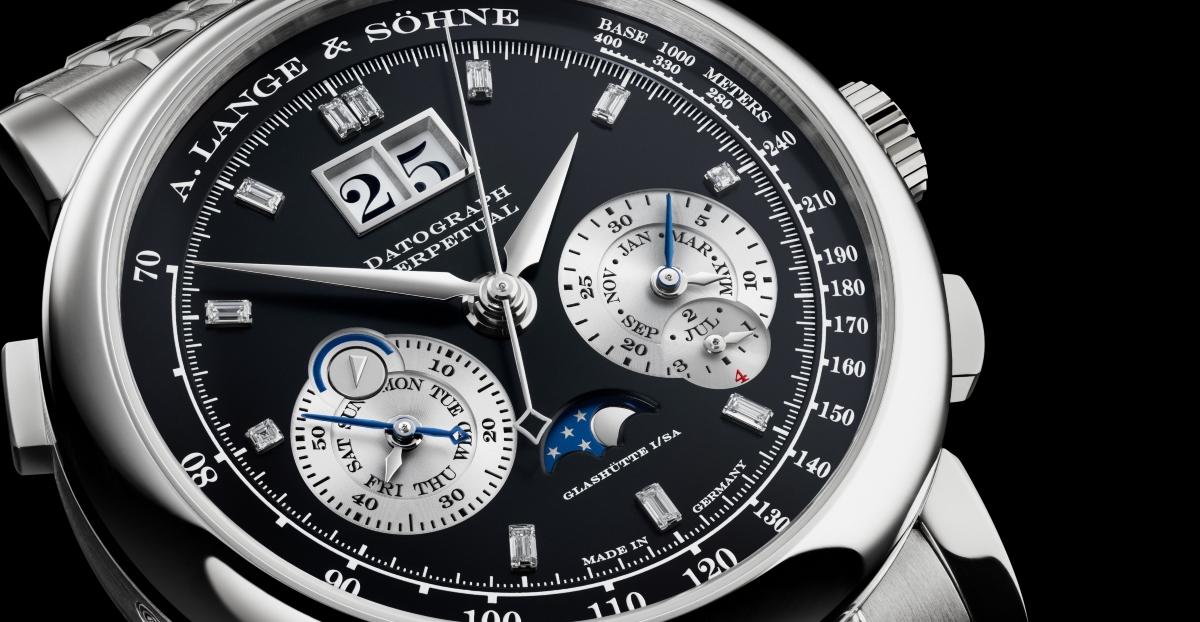
The A. Lange & Söhne Datograph Perpetual Is Twenty Years in the Making
Two decades of Datograph watchmaking culminate in a limited-edition timepiece that unites a flyback chronograph and perpetual calendar.
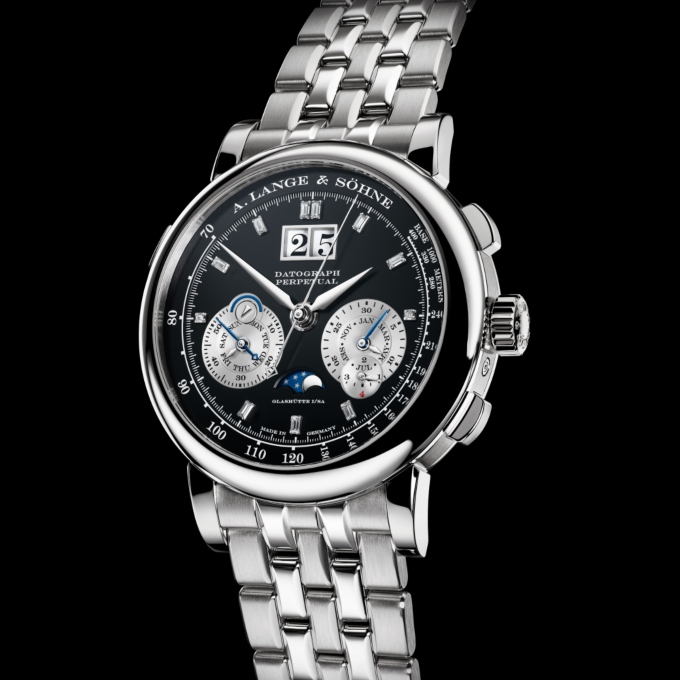
First introduced in 2006, the Datograph Perpetual brought together two of watchmaking’s most demanding complications in a single timepiece. Two decades on, A. Lange & Söhne revisits the landmark with a limited edition in platinum, distinguished by a black dial set with baguette-cut diamonds and an integrated five-row bracelet.
There are few complications in watchmaking as technically demanding as the chronograph and perpetual calendar. The former measures fleeting intervals with mechanical precision, while the latter tracks the passing years, accounting for the varying lengths of months and even leap years. Bringing the two together requires considerable ingenuity, making the Datograph Perpetual one of A. Lange & Söhne’s most compelling expressions of haute horlogerie. The original Datograph Perpetual was the manufacture’s first wristwatch to combine these two complications with its signature outsize date. For its 20th anniversary, the German watchmaker has given the model a new interpretation in 950 platinum, limited to just 50 pieces worldwide.
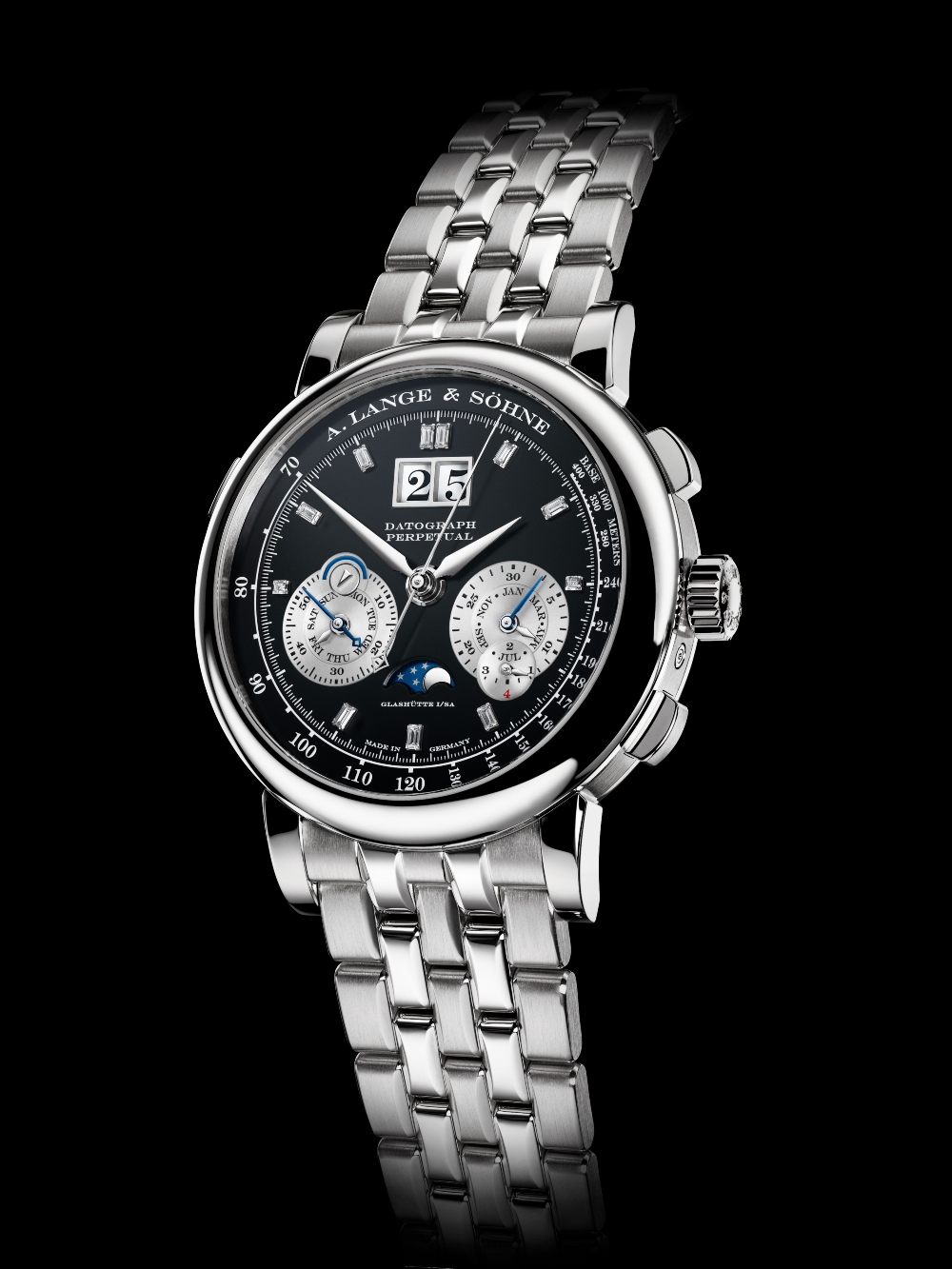
The latest edition retains the distinctive architecture of its predecessor, although its appearance takes on a more precious character. A black dial provides the backdrop for eleven baguette-cut diamonds, individually set by hand as hour markers. Together weighing approximately 0.13 carats, the diamonds introduce a discreet luminosity to the otherwise restrained composition. The markers at four and eight o’clock have been omitted to accommodate the repositioned auxiliary dials, while a pair of diamonds marks the 12 o’clock position.
At the centre of the watch’s appeal, however, remains the interplay between its two principal complications. The flyback chronograph is operated through a traditional column-wheel mechanism, which coordinates the various switching sequences. Its precisely jumping minute counter ensures clear readings of elapsed time, while the flyback function allows the wearer to stop, reset and restart a measurement with a single press of the pusher. The mechanism measures intervals to one-fifth of a second.
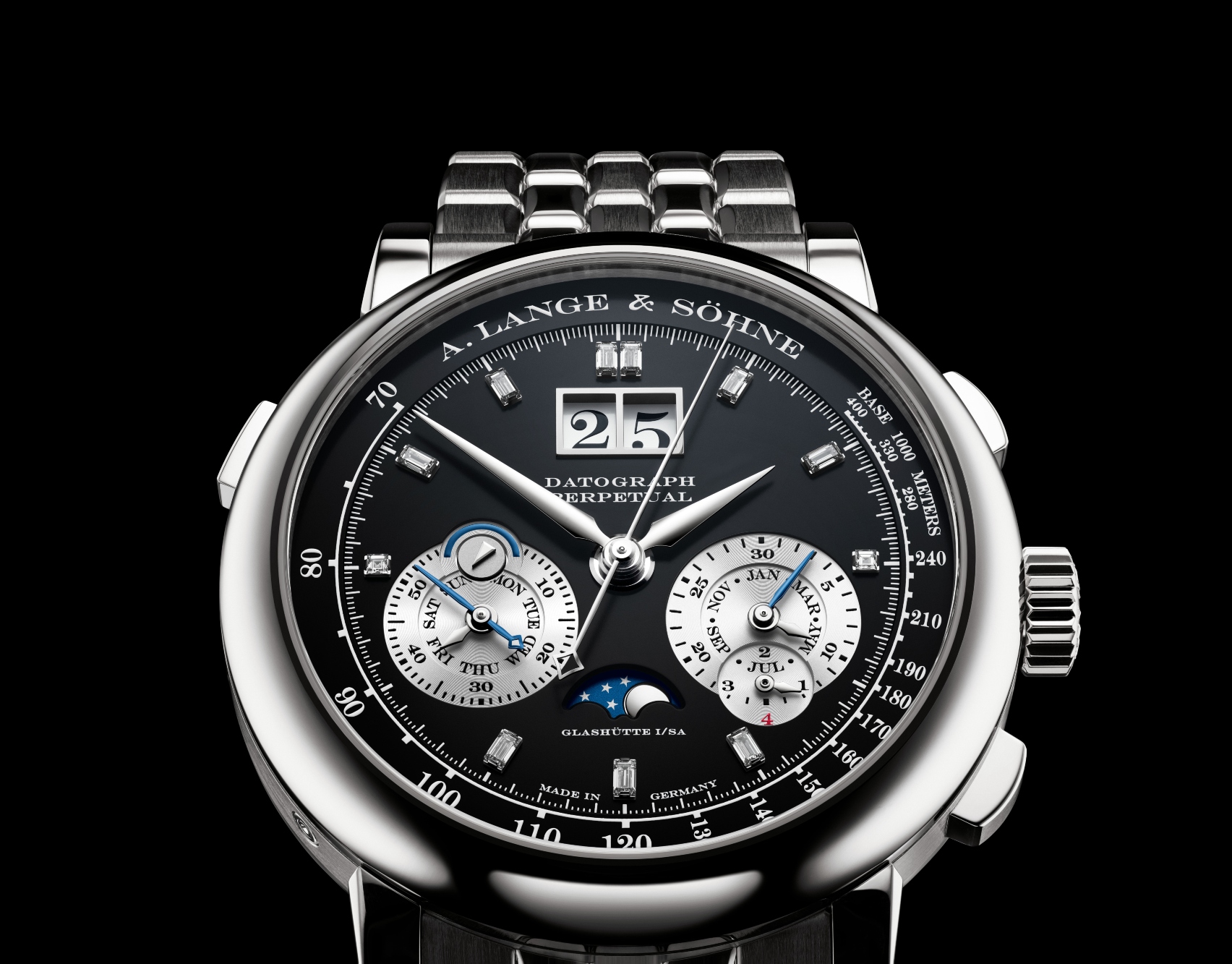
The perpetual calendar, meanwhile, is designed to account for the irregularities of the Gregorian calendar across decades. It automatically distinguishes between months of different lengths and recognises leap years, requiring correction only on 1 March 2100, when the calendar omits a leap year. Its moon-phase indication is similarly exacting, deviating from the actual lunar cycle by just one day after 122.6 years, provided the watch remains continuously wound.
Despite the number of indications, the dial maintains a considered sense of order. The characteristic outsize date occupies a prominent position at 12 o’clock, while the subsidiary displays for the small seconds, day of the week and day/night indication sit to the left. Those on the right indicate the month and leap year, alongside the chronograph’s jumping minute counter. At six o’clock, the moon-phase display completes the arrangement. The calendar and moon-phase indications can be advanced together using a rapid-correction pusher at 10 o’clock, with individual recessed correctors allowing for separate adjustments.
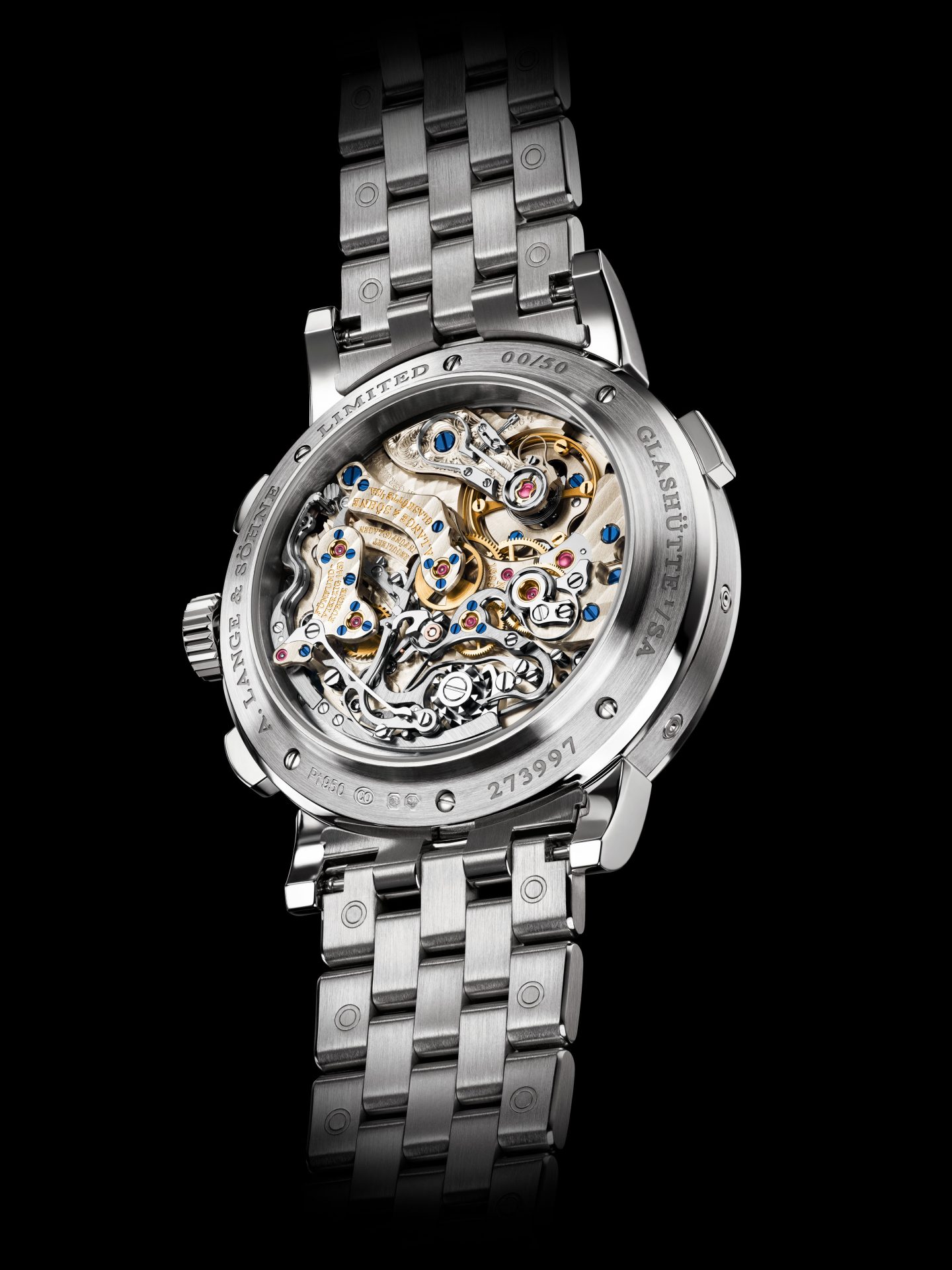
Turn the watch over and the sapphire-crystal caseback reveals the manually wound L952.1 calibre, a movement comprising 556 individual components. Of these, 223 are dedicated to the perpetual calendar alone, an indication of the mechanical complexity contained within. The chronograph’s column wheel, switching levers and rockers are also visible, offering a closer look at the architecture behind its operation.
The platinum construction extends beyond the case to the five-row bracelet, giving the Datograph Perpetual a more integrated appearance. Measuring 41mm in diameter and 13.5mm in height, the case combines polished and satin-finished surfaces that bring out the cool lustre of the precious metal. The bracelet follows the same treatment, with alternating finishes and carefully bevelled link edges lending definition to its profile.
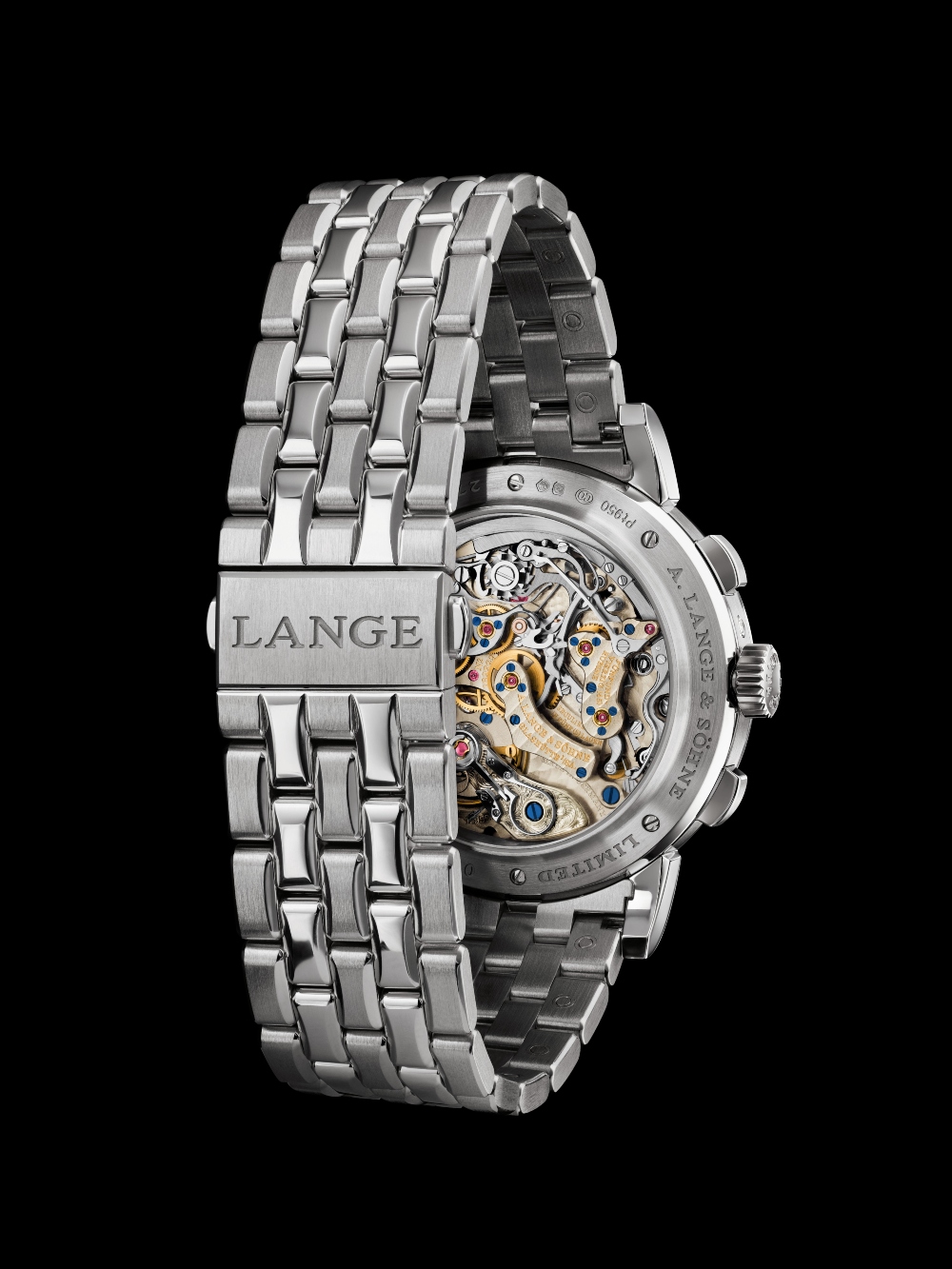
As with other A. Lange & Söhne movements, the calibre receives extensive hand-finishing and is assembled twice to ensure its performance and aesthetic standards. In the Datograph Perpetual, the challenge lies in making two intricate mechanisms work in concert, while preserving the clarity of the dial and the reliability of their individual functions.
Twenty years after its introduction, the Datograph Perpetual remains a demonstration of the manufacture’s ability to bring complex watchmaking into a cohesive design. This anniversary edition adds another dimension to that proposition, pairing its mechanical sophistication with the enduring appeal of platinum and the subtle brilliance of diamonds.