The Drinks That Are Defining 2026
So many reasons to celebrate – with these exceptional drops.
Every August brings a fresh wave of “best of summer” press releases, most of which say the same thing in different fonts. But look past the marketing calendar and 2026 has quietly produced one of the more interesting runs of drinks news in years: a whisky maker willing to abandon her house style, a 208 year old Champagne maison finally admitting it had been hoarding a secret recipe, and a handful of grower Champagnes that Singapore’s more serious cellars have started rationing. Here is what belongs on your radar, and on your bar cart, before the year is out.
The One to Start With: The Macallan’s Coconut Curveball
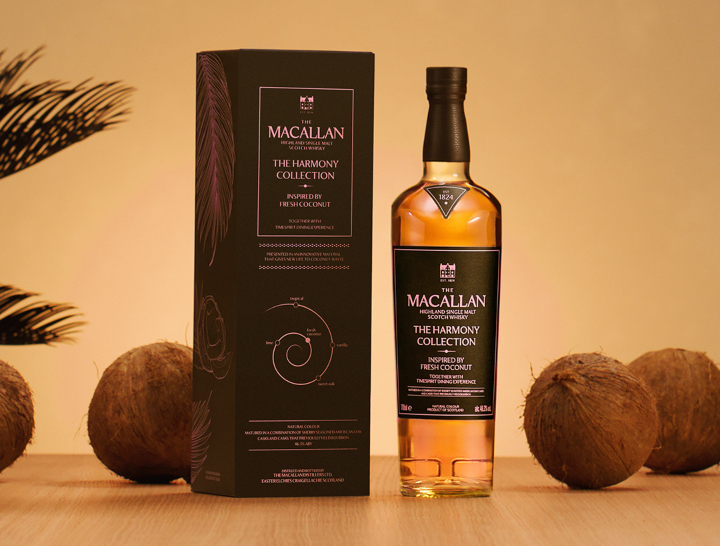
The Macallan does not often surprise people, which is exactly why its latest release is worth paying attention to. The Harmony Collection, Inspired by Fresh Coconut, is the sixth and final chapter in a series built on the idea that Speyside whisky and tropical flavour are… not natural enemies!
Bottled at 46.3% ABV, it delivers coconut milk, zesty lime and dried tropical fruit against sweet oak, a combination Master Whisky Maker Kirsteen Campbell achieved through careful selection of sherry seasoned American oak and ex-bourbon casks, the American oak drawing out a coconut character rarely seen in a Macallan expression. It is a genuinely playful whisky wearing a serious label, and the packaging matches the ambition: the box is made from discarded coconut fibres, processed without emissions into a black, textured material that closes the loop on the flavour story. El Celler de Can Roca pastry chef Jordi Roca has designed a coconut focused pairing menu around the release, though that experience is currently confined to The Macallan Estate. The bottle itself, thankfully, travels rather better.
The Champagne That Lives Up To the Hype: Dom Pérignon’s Triple Play
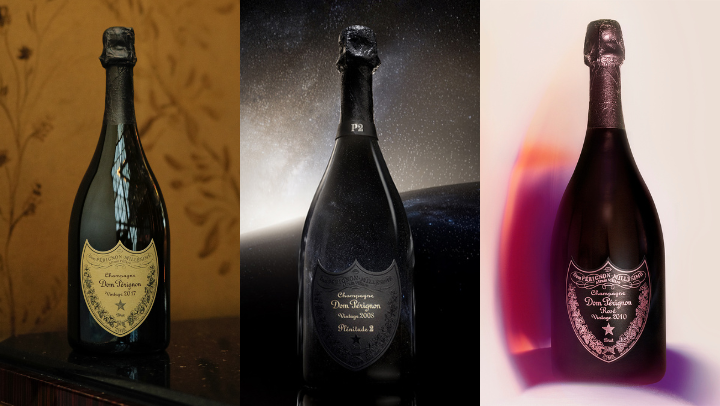
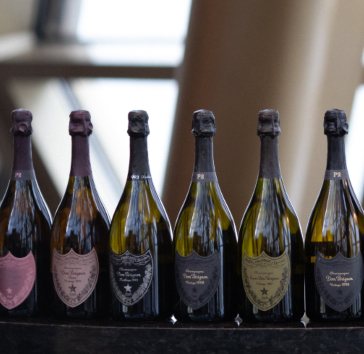
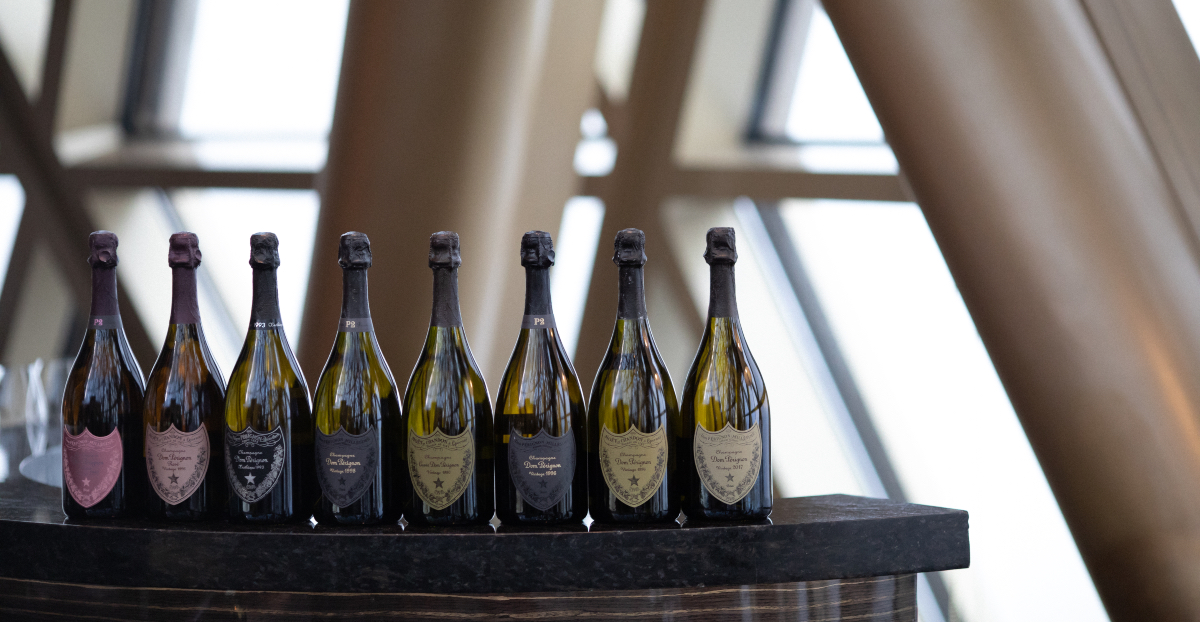
Dom Pérignon rarely undersells itself, and this year it has the vintages to back the confidence up. Cellar Master Vincent Chaperon has released three wines under the banner of Harmony: Vintage 2017, Vintage 2008 Plénitude 2, and Rosé Vintage 2010. The 2017 is the most immediately arresting, born of a historically hot, storm disrupted season and built from unusually mature chardonnay balanced against a small, carefully chosen selection of pinot noir, with a soft, almost weightless texture that belies its structure. The 2008 Plénitude 2 takes the opposite route: patience. Reaching its second window of expression after nearly two decades on the lees, it carries citrus and roasted coffee notes with a persistence that only comes from time. The Rosé Vintage 2010, meanwhile, is the boldest of the three, built on riper, more assertive pinot noir and finished with a poise that keeps the power in check. Together they justify the reputation Dom Pérignon has spent decades building, and if you can find a pour of the 2017 on a Singapore wine list this autumn, it is worth the detour.
The Underrated Gem: Michel Gonet
If you want to sound like you know something the room does not, Michel Gonet is currently the name to drop. The house has deep roots in the Grand Cru village of Avize, with a family history in Champagne stretching back to the early 1800s, and vineyard holdings in Avize, Oger and Le Mesnil-sur-Oger that most marketing departments would kill for. For decades Gonet was content to sell fruit to bigger houses and keep a low profile. That has changed. A new generation, led by Diane and Sophie Gonet alongside chef de cave Antoine Gomérieux, has begun working with sommelier Marco Pelletier to sharpen the range into something more precise and site specific, favouring hand riddling and the increasingly rare practice of poignettage, in which the lees are gently agitated by hand rather than machine, for added complexity. Pelletier calls Michel Gonet “the sleeping beauty of Champagne”, and tasting the single vineyard Blanc de Blancs from Le Mesnil sur Oger’s Les Hautes Mottes parcel, chalky, tightly wound and built for the long haul, it is not hard to see why. This is a house on the way up rather than one coasting on reputation, and the prices, for now, have not caught up with the quality.
The One I Keep Reaching For: Henri Giraud
Full disclosure: this is the Champagne currently occupying more space in my glass than anything else, and for good reason. Henri Giraud, based in Aÿ, has spent years building a reputation on an approach most houses have abandoned: barrel fermentation in oak sourced specifically from the Argonne Forest, a terroir choice as deliberate as any vineyard selection. The result is a house style that has drawn comparisons to Krug, with the top cuvée, Fût de Chêne, offering similar richness and complexity at a noticeably gentler price. The Hommage au Pinot Noir, a 100% pinot noir aged eleven months in small oak casks before finishing in tank, is a particular standout, its red plum and kirsch character wrapped in a spiced, almost savoury softness that makes it as comfortable at the dinner table as at the bar. Henri Giraud marked its 400th anniversary last year, and its exclusive Singapore distributor, Pivene, has been pouring it into some of the city’s better wine bars. It remains a relatively quiet name outside serious collecting circles, which is precisely what makes it worth seeking out.
The One to Watch Out For: Billecart-Salmon’s First Ratafia
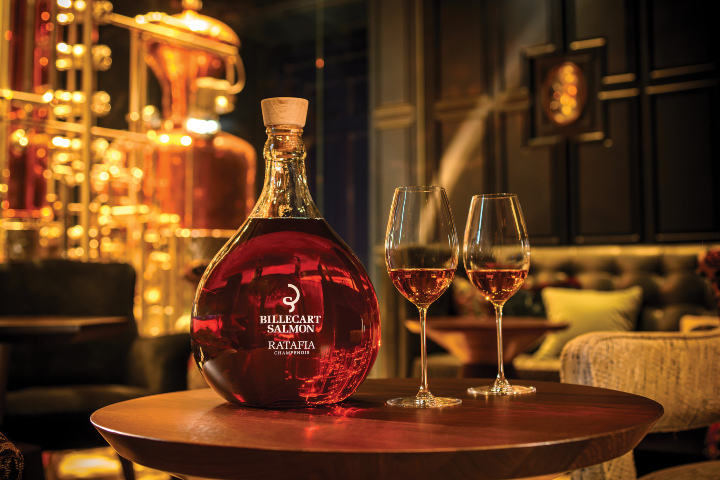
Billecart-Salmon has been making Champagne in Mareuil sur Aÿ since 1818, and it has taken the house 208 years to release its first Ratafia Champenois. The wait, it turns out, was about discipline rather than delay. Billecart-Salmon uses only first press juice for its Champagne cuvées, which left the second and third press must, richer and more concentrated, without a home. Rather than sell it off, seventh generation owner Mathieu Roland-Billecart’s team turned it into a fortified wine through mutage, halting fermentation of pinot noir must with Fine de Champagne, then ageing the result in mature Burgundy oak casks. The finished wine, bottled at 18% ABV, blends four vintages from 2019 through 2022 and is being released in strictly limited quantities, just two barrels for the entire first run. It made its global debut at Rosewood Amsterdam in spring 2026 and arrives in Asia-Pacific this autumn, with confirmed pours at Rosewood Hong Kong and Agnes in Brisbane, while Singapore and Shanghai venues are still being finalised. Wider retail, in 500mL bottles, is not expected in Singapore until early 2027, alongside a small run of 5L Dame Jeanne bottles reserved for select hospitality partners globally. If Billecart-Salmon’s patience with everything else it releases is any guide, this one is worth waiting for, and worth booking a table for the moment it lands.
The Spirit to Splash Out On: Clase Azul
Tequila’s shift from party shot to serious spirit has been building in Singapore for a few years now, and Clase Azul remains the clearest expression of where the category has landed. Handcrafted in Jalisco and famous for its hand painted ceramic decanters, each one a small, breakable piece of Mexican craft, the brand has become the tequila equivalent of a decanted Bordeaux: something bought as much for the ritual as the pour. The Reposado, aged eight months in American whiskey casks, offers a smooth, hazelnut and vanilla profile that eases newcomers into aged tequila without losing the agave character that makes the category interesting in the first place. Prices in Singapore climb quickly from there, with limited editions and older expressions comfortably running into the thousands of dollars, and the brand’s Día de los Muertos releases have become genuine collector pieces. It is not subtle, and it is not cheap, but as tequila continues its climb up Asia’s premium spirits shelves, alongside newer arrivals like Solisca, Clase Azul remains the name most likely to make a bar cart look considered rather than merely stocked.