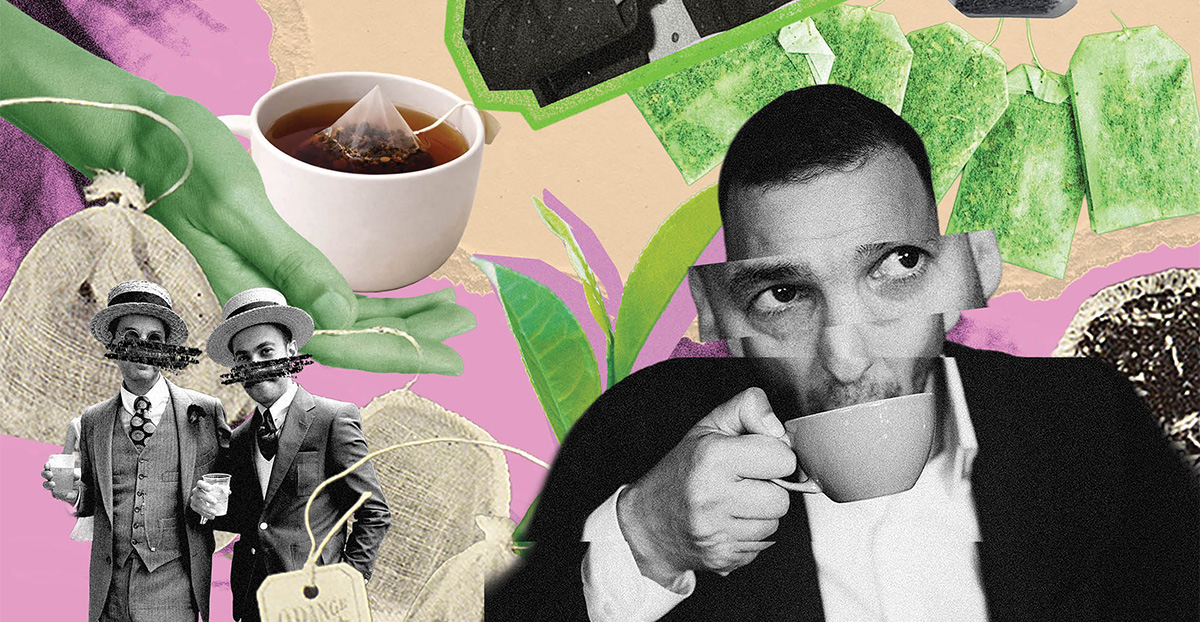
Drinking Tea is the New Cool Thing
Tea is making a strong case as the go-to cool kid drink, as opposed to alcohol. GQ finds out what’s going on with this phenomenon.
“Drinks tonight?”
For decades, few social invitations have been as familiar. But for a younger generation, the promise of a night out over drinks is beginning to lose its pull. Increasingly, Gen Z is drinking less, drinking differently, or opting out altogether — not necessarily in pursuit of sobriety, but in favour of something more considered.
The shift has been dubbed the rise of the “sober curious” generation: a growing willingness to question the role alcohol plays in our social lives, rather than accepting it as an automatic part of the ritual. The reasons are familiar. Better sleep, mental wellbeing and overall health now rank alongside work, exercise and social life as markers of a life well lived. The morning-after hangover and the anxiety that often comes with it has little appeal when there is a workout, a full day ahead or simply no desire to lose control.
Socialising itself has changed, too. As more of our lives move online, alcohol is losing some of its old status as the ultimate social lubricant. Breaking the ice no longer necessarily requires a drink in hand. Coffee runs, run clubs, dinners and daytime gatherings have become equally valid ways to connect.
There is also the question of visibility. In an age when every night out can become someone’s Instagram Story, the consequences of an ill-advised moment can extend well beyond the morning after. The fear of being filmed, posted and permanently preserved online has made self-awareness and self-control part of the social equation.
But if alcohol is making its way out of the picture, what takes its place?
Enter tea. More specifically, matcha.

Once associated primarily with traditional Japanese tea culture, matcha has found a new audience among the sober curious. Its appeal goes beyond its vivid green hue and Instagram-ready appearance. Naturally containing caffeine and L-theanine, matcha offers a gentler kind of stimulation: alert without the crash, focused without feeling frenetic. For a generation increasingly conscious of how it feels, that distinction matters.
Matcha also gives social drinking a new timetable. Where alcohol traditionally belonged to the hours after work, matcha has become a daytime ritual — a reason to pause, meet a friend or simply take a moment for yourself. The iced matcha latte has become its own kind of social shorthand, signalling an appreciation for wellness, taste and a certain degree of self-discipline.
The trend has even found its way into the bar. Around the world, bartenders are experimenting with tea-led and alcohol-free cocktails, proving that leaving out the booze does not have to mean leaving behind the theatre of drinking. A carefully made drink can still offer complexity, ceremony and occasion, whether or not it contains alcohol.
None of this necessarily spells the end of drinking. Instead, it points to a broader recalibration of what people want from a drink — and from a night out. The drinks industry has already responded, with established spirits and beer brands expanding into alcohol-free alternatives, while bars and restaurants increasingly treat tea, botanicals and other zero-proof ingredients with the same care once reserved for spirits.
The sober curious generation is not rejecting pleasure. It is simply becoming more selective about it. The idea of drinking for the sake of drinking is giving way to a more deliberate approach to socialising, wellness and indulgence.
And so, as the cocktail glass gives way to a cup of vivid green matcha, being clear-headed is no longer synonymous with being boring. It might just be the new way to have a good time.
- Global tea consumption is on the rise. According to the Food and Agriculture Organization of the United Nations (FAO), global tea consumption increased by 2 per cent year-on-year in 2022, with growth continuing in 2023. The organisation’s long-term data also shows that the number of tea drinkers worldwide has continued to increase over the past several decades.
- Young Americans are questioning alcohol consumption. In a 2024 Gallup survey, 67 per cent of respondents aged 18 to 34 said people who drink alcohol should reduce their consumption, while 23 per cent believed they should stop drinking altogether. Only 10 per cent felt that no change was necessary.
- Tea consumption per capita is growing. FAO’s long-term data shows that global per-capita tea consumption has increased by approximately 2.5 per cent over the past decade.
- Young Americans are drinking less. Gallup’s long-term data on US drinking habits shows that the proportion of adults aged 18 to 34 who say they drink fell from an average of 72 per cent between 2001 and 2003 to 62 per cent between 2021 and 2023.
- US drinking rates hit a record low. By 2025, the overall proportion of American adults who reported drinking alcohol had fallen to 54 per cent—the lowest level recorded by Gallup. That compares with 62 per cent in 2023 and 58 per cent in 2024.
Enter the Tea Universe
Green Tea
Green tea is defined by one crucial step: shortly after the leaves are picked, they are heated—usually by steaming or pan-firing—to halt oxidation. This helps preserve the fresh green colour, vegetal character and clean, refreshing flavours of the leaves. Japanese sencha, Chinese Longjing and Bi Luo Chun all belong to this broad family.
The matcha that has swept across the world in recent years is also a green tea, but its production differs significantly from that of sencha. According to Japan’s Ministry of Agriculture, Forestry and Fisheries, the leaves destined for matcha are first cultivated as tencha, with the tea plants shaded before harvest. The leaves are then steamed and dried without being rolled, before their stems and veins are removed and the leaves ground into an exceptionally fine powder.
In other words, when you drink matcha, you are not simply drinking water infused with tea leaves—you are consuming the finely ground leaf itself.
White Tea
White tea is typically made from young buds or tender leaves and undergoes relatively little processing, primarily through withering and drying. Compared with the vivid freshness of green tea or the fuller character of black tea, white tea tends to be lighter and more delicate, with vegetal, floral and gently sweet notes.
Silver Needle and White Peony are among its best-known varieties. Some white teas are also aged, developing new aromas and flavours over time. As a result, the idea of “vintage” has become part of the language of tea, an idea that makes white tea increasingly comparable to the world of collectible wine.
Yellow Tea
Perhaps the least familiar of the six major tea categories, yellow tea shares some similarities with green tea but undergoes an additional process known as men huan or “yellowing”. The leaves are allowed to rest in a warm, humid environment, creating subtle changes that soften their more pronounced vegetal character into something rounder and more mellow.
Junshan Yinzhen and Mengding Huangya are among the best-known examples. Production remains relatively limited, and the meticulous process involved gives yellow tea a quiet sense of rarity within today’s specialty tea culture. ISO also recognises yellow tea as one of the six fundamental tea categories.
Oolong Tea
Sitting somewhere between green and black tea, oolong is perhaps one of the most fascinating gateways into the world of specialty tea. As a partially oxidised tea, it encompasses an extraordinarily broad spectrum of flavours. At one end, it can be light, floral and almost reminiscent of green tea; at the other, it can reveal notes of ripe fruit, toast, spice and wood.
The US National Center for Complementary and Integrative Health (NCCIH) similarly classifies oolong as a partially fermented or oxidised tea. Tieguanyin, Wuyi rock tea, Phoenix Dancong and Taiwanese high-mountain teas all belong to this diverse family.
Here, origin, terroir, cultivar and the tea maker’s craft can all dramatically influence the final cup. It is perhaps the tea category that most naturally invites comparison with wine: change the mountain, the season or the maker, and the same type of tea can become an entirely different experience.
Black Tea
What is known as “red tea” in Chinese is classified as black tea in English. Unlike green and oolong teas, black tea undergoes a more complete oxidation process, resulting in darker leaves and a deeper, more layered flavour profile. Depending on its origin and production, it can reveal notes of honey, dried fruit, flowers, malt and spice.
From Darjeeling and Assam in India to Ceylon in Sri Lanka, as well as Qimen and Dianhong from China, regional differences can be striking. This is why specialty black tea is far more nuanced than the familiar image of breakfast tea served with milk.
Dark Tea
With dark tea, the story does not end when the tea is made. Its character continues to develop through microbial fermentation and ageing, with pu-erh among its best-known examples. Within pu-erh itself, raw (sheng) and ripe (shou) styles offer distinctly different flavour profiles and have developed their own collecting cultures.
Age, storage conditions, region and even the production history of a particular batch can all influence both its character and value. Of the six major tea categories, dark tea perhaps has the strongest affinity with wine, whisky and even antiques: what you taste is not only the tea itself, but also the imprint of time.
Way Up High
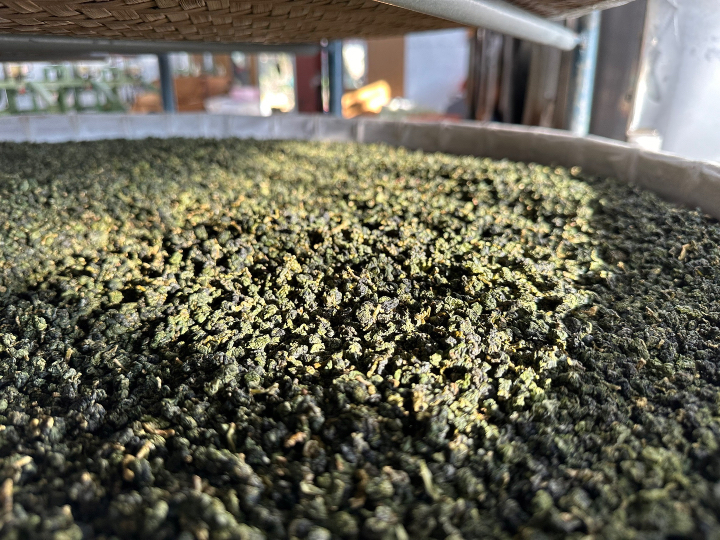
As changing habits reshape the global drinking landscape, one Taiwanese tea producer is making a case for tea as the next expression of refined living. From the high-altitude Xinjiayang tea-growing region of Lishan, Lishan Mingbo Tea has built its reputation around high-mountain “cold-grown” tea—and has been awarded the highest three-star rating by Belgium’s International Taste Institute (iTQi) for ten consecutive years.
For founder Chen Meng-Chih, the appeal of high-mountain tea lies in its ability to bridge tradition and the way a new generation wants to live today.
“Against the backdrop of declining alcohol consumption globally, premium Taiwanese tea has become a new bridge to younger consumers,” he says. At major tea exhibitions, he has noticed a marked increase in younger visitors, challenging the long-held perception that tea culture is something old-fashioned or overly formal.
The younger generation, Chen observes, is not necessarily rejecting the depth of tea culture. Rather, it is the ritual and tradition surrounding it that they are questioning. “They are looking for a unique experience where taste meets craftsmanship,” he says.
Unlike previous generations, who may have placed greater emphasis on the precise steps and formalities of tea preparation, younger drinkers tend to favour simplicity and efficiency. Yet that does not mean they are less discerning. If anything, Chen believes they are more attentive than ever to the quality of the leaves, their provenance and the craftsmanship behind each cup.
In an age of information overload and relentless digital acceleration, tea offers something increasingly rare: a reason to slow down.
“The core appeal of making tea is the depth of conversation that happens around the tea table,” says Chen. “From boiling the water and warming the cup to pouring and serving, the process forces people to slow down.”
That deliberate pace is part of tea’s renewed appeal. In a world accustomed to instant gratification, the ritual creates a small pocket of stillness—while the shared experience of drinking gives people a reason to connect. Tea becomes not simply something to consume, but a social ritual and an expression of personal taste.
For Lishan Mingbo Tea, consistency is central to that proposition. The company has received the iTQi three-star distinction for ten consecutive years, a recognition Chen attributes not only to the character of its tea, but to the ability to maintain a consistent standard over time.
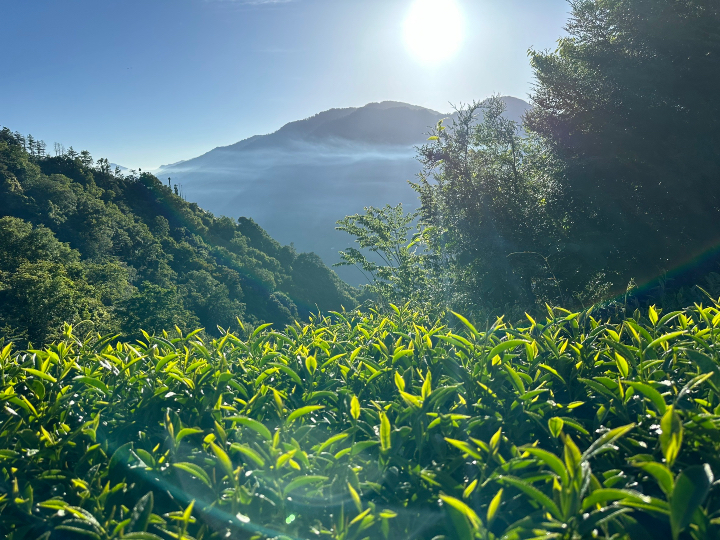
Its tea gardens sit between 1,800 and 2,300 metres above sea level in the Lishan mountains, where the tea plants grow in a cool, high-altitude environment surrounded by forest and mineral-rich soil. But maintaining quality at this elevation is becoming increasingly challenging as climate change brings more extreme and unpredictable weather.
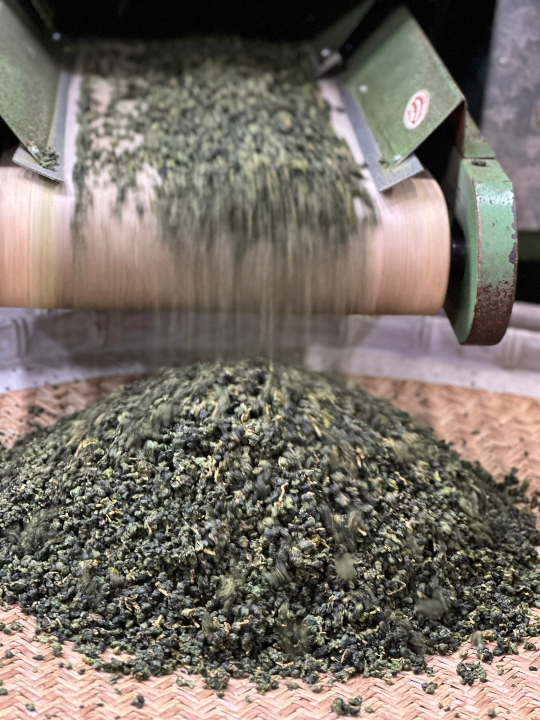
One of the team’s biggest challenges is therefore monitoring the quality of fresh tea leaves and managing the plantations throughout the year. “We have to adjust our cultivation and fertilisation strategies according to the microclimate of each season,” says Chen. The goal is to preserve the distinctive character of high-mountain tea despite increasingly variable conditions.
For those new to specialty tea, Chen recommends starting with three things: colour, aroma and taste. A high-quality high-mountain tea should produce a clear, luminous liquor, typically with golden or honey-green tones. Its aroma should be clean and elegant, with the distinctive cool, mineral character associated with high-altitude tea. On the palate, it should feel rounded and smooth, with a lingering sweetness rather than bitterness or astringency.
A good high-mountain tea should also reveal itself over multiple infusions, retaining its smoothness and returning sweetness with each brew.
From the cool, elevated terrain of Taiwan’s mountain plantations to the increasingly contemporary tea table, the story of Lishan’s high-mountain tea is ultimately one of adaptation: taking a centuries-old drinking culture and finding a new vocabulary for how we drink, connect and appreciate craftsmanship today.