Can You Hack a Better Life? Inside Singapore’s Biohacking Boom
From wearables and biomarker testing to cold plunges and red light therapy, men are turning to technology to train, recover and age better. But how much can you really optimise your way to good health?
Ten thousand steps feels almost quaint now.
Your watch can estimate your VO₂ max — how efficiently your body uses oxygen during exercise — track heart rate variability (HRV) to gauge recovery and scrutinise your sleep. If that isn’t enough, there are continuous glucose monitors, cold plunges and red-light beds waiting.

Health has acquired a dashboard.
It comes as running clubs flourish, HYROX takes off and wearable technology tops American College of Sports Medicine’s list of global fitness trends for 2026. Training increasingly comes with tracking and recovery attached. As the question shifts from “How hard can I train?” to “How well can my body perform?”, we arrive at biohacking.
Enter biohacking
Despite the futuristic name, biohacking has a simple premise: It’s all about using information about your body to make a change, then measure the response and adjust.
Its modern roots overlap with the Quantified Self movement of the late 2000s, when early adopters meticulously tracked their sleep, exercise and diet. As technology improved, data-driven optimisation became associated with Silicon Valley entrepreneurs and elite performance culture.

Wearables helped take it mainstream, putting sleep, heart rate and estimated cardiovascular fitness on our wrists. Elite athletes made optimisation aspirational. Cristiano Ronaldo and baseball superstar Shohei Ohtani both use health tracker WHOOP to monitor sleep and recovery, while Olympic surfer Kanoa Igarashi has spoken about using data from his Oura ring to understand how sleep affects his training and recovery.
Standing at the extreme end is tech entrepreneur Bryan Johnson, who has turned his body into a multimillion-dollar longevity experiment. In 2023, he received plasma from his then-17-year-old son in a bid to explore its possible rejuvenating effects. He stopped after reporting no benefit; the US FDA says young-donor plasma has no proven benefit against normal ageing.
Most biohackers are nowhere near Johnson. The principle that went mainstream is far simpler: Measure yourself, change something and see if you improve.
Why now?
At 20, the goal might be about achieving abs or clocking in a faster 5km run. But by the time you hit your 30s and 40s, your goals change as work, family, stress and ageing enter the equation.
Dr Varun Reddy, a physician with more than 15 years’ experience in preventive and performance medicine, has witnessed that shift. “For most of my career, patients arrived after something had happened,” says Reddy, who was founding chief medical officer of Elyx Life, Singapore’s first concierge longevity service. “But now people in their 30s and 40s come in before disease, asking: ‘I’m well, how do I stay that way?’”
Singapore appears to be in on the trend. A 2025 NUS Academy for Healthy Longevity survey of more than 3,000 residents found 55.5 percent were interested in attending a healthy-longevity clinic. Meanwhile, the Global Wellness Institute valued Singapore’s wellness economy at US$23.2 billion in 2024, up from US$15 billion in 2021.
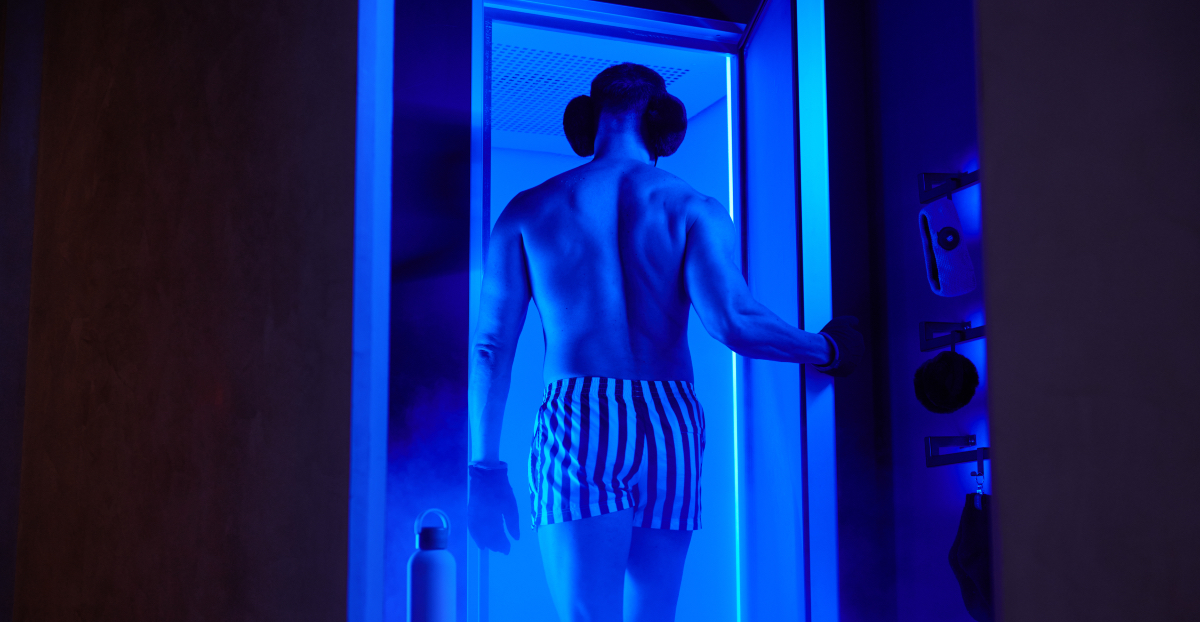
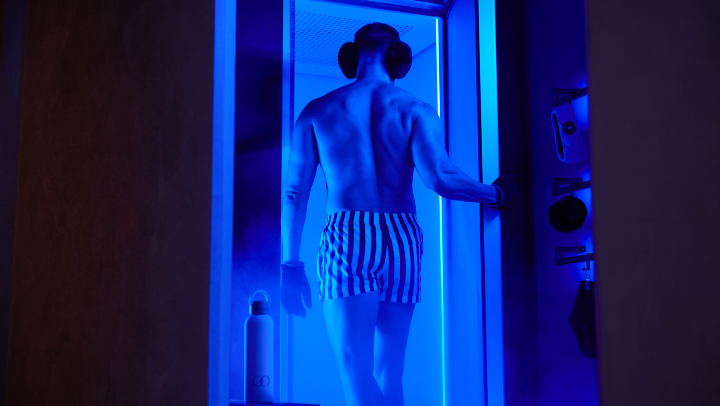
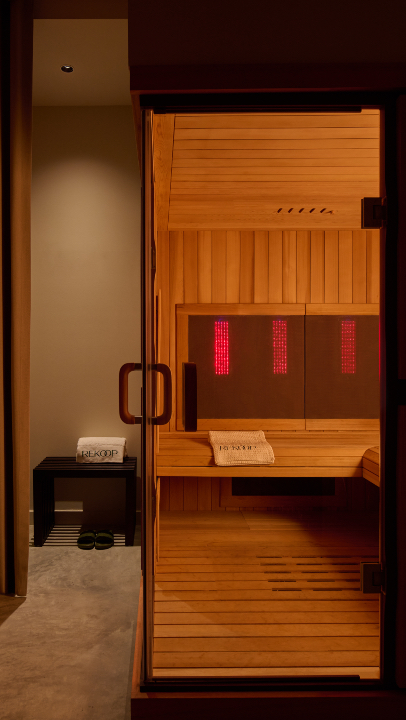
The market has responded. Modern wellness and contrast therapy clubs REKOOP, Shelter by ReFormd and Hideaway (among others) offer combinations of cold, heat, compression and other recovery technologies in Singapore. Recovery no longer means simply resting. It can now be tracked, optimised and booked.

Inside the life of a biohacker
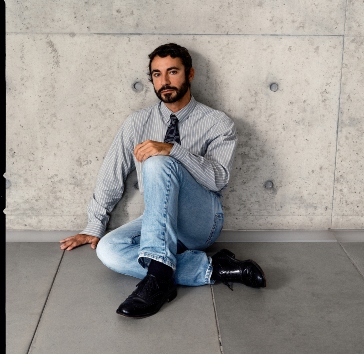
Health-tech entrepreneur Nishanth Sudharsanam, 37, began biohacking in 2017 after an InBody assessment put his BMI at 26 and body fat at 30 percent. So he bought a Garmin. Biomarker tests, body-composition scans, glucose monitoring, strength training, half-marathons and nootropics followed.
For Sudharsanam, biohacking means “using data to optimise your biology to live a better, fuller life”. Done more systematically, he says it has delivered measurable progress: His body fat fell from 29.3 to 20.9 percent, while his half-marathon time improved by 18 minutes after he made changes to his training and lifestyle.
However, not every experiment paid off. A highly caffeinated nootropic left him unpleasantly wired, while three different methods produced three different VO₂-max readings. He initially thought of averaging them before realising that some measurements are better for establishing a baseline and others for tracking progress.
The lesson was not to collect more data for its own sake, but to know what you are measuring, why it matters and how it should inform what you do next.

The biohacker
Today’s toolbox stretches from wearables, biomarker panels and body-composition testing to cold plunges, cryotherapy, infrared saunas and hyperbaric oxygen.
Reddy recommends starting somewhere less glamorous: with a reason. “Most people arrive over-measured and under-examined,” he says. Even biological age is not one definitive measurement, but a family of estimates that can disagree.
It can get expensive, too. REKOOP’s annual membership, for instance, starts at S$2,000 for 48 treatment credits. At the far end of the spectrum, Elyx Life’s concierge healthspan service can reach up to US$150,000 (about S$190,000) a year.
Do they actually work?


When it comes to biohacking technologies, what matters is what they have actually been shown to improve — especially since it comes at a hefty price tag.
Cold exposure may help post-exercise soreness, but that is different from improving long-term health. Dr Chua Ser Kenon, consultant in orthopaedic surgery at Singapore General Hospital, keeps his expectations specific. “I would adopt it if it helps with pain relief and soreness after exercise,” he says, “but I would not adopt it with the expectations that it will improve my general health.”
Hyperbaric oxygen has established medical uses, including certain wound-healing applications, but that does not establish longevity benefits for healthy people. A 2018 systematic review found potential benefits from dry sauna therapies, including infrared sauna, but noted that much of the evidence came from small studies. More recent 2025 reviews suggest some cardiovascular benefits from passive heat therapies, but evidence that infrared sauna improves longevity in healthy people remains lacking.
Assistant professor Tang Hong-Wen of Duke-NUS Medical School cautions that decisions should follow “high quality clinical data and evidence” rather than trends or commercial incentives. Wellness today moves at TikTok speed. Medicine, however, does not.
From biohacking to longevity

After seven years of experimenting, one of Sudharsanam’s most effective interventions has been decidedly low-tech: strength training. In 2024, squat-walking beside his daughter as she learnt to cycle wrecked his legs. Two years later, doing the same with his younger daughter barely broke a sweat.
Perhaps that is the real goal: not immortality, but capability.
It is also where biohacking and longevity meet. Biohacking uses data and interventions to influence how your body functions today. Healthspan is the period spent healthy and functional. Longevity looks at preserving those healthy years and potentially extending lifespan.
At Chi Longevity, that longer horizon is the focus. Dr Naras Lapsys, its chief clinical officer and senior dietitian, says the objective is “to extend the period of life spent in good health, maintaining function, independence and resilience over time”.
Its programmes assess areas including metabolic and cardiovascular health, body composition, physical and cognitive performance, sleep and stress. Lapsys stresses that healthy longevity medicine should “complement conventional healthcare, not replace it”.
After all the technology, the experts return to familiar foundations: exercise, sleep, nutrition and stress management.
Sudharsanam has too. “I found myself going back to the basics and figuring out how to hack my motivation instead of hacking my biology,” he says.
Perhaps that is biohacking’s great irony. Technology can tell us more about our bodies than ever before, but the habits most consistently associated with long-term health remain largely the same.
The real challenge is, it appears, turning these practices into habits that last.