Anthony Chen and Yeo Yann Yann on Their Craft and Professional Chemistry
Anthony Chen and Yeo Yann Yann are lighting up Singapore cinema with their new release, We Are All Strangers. They discuss their craft and the instinctive chemistry that shapes their work together.
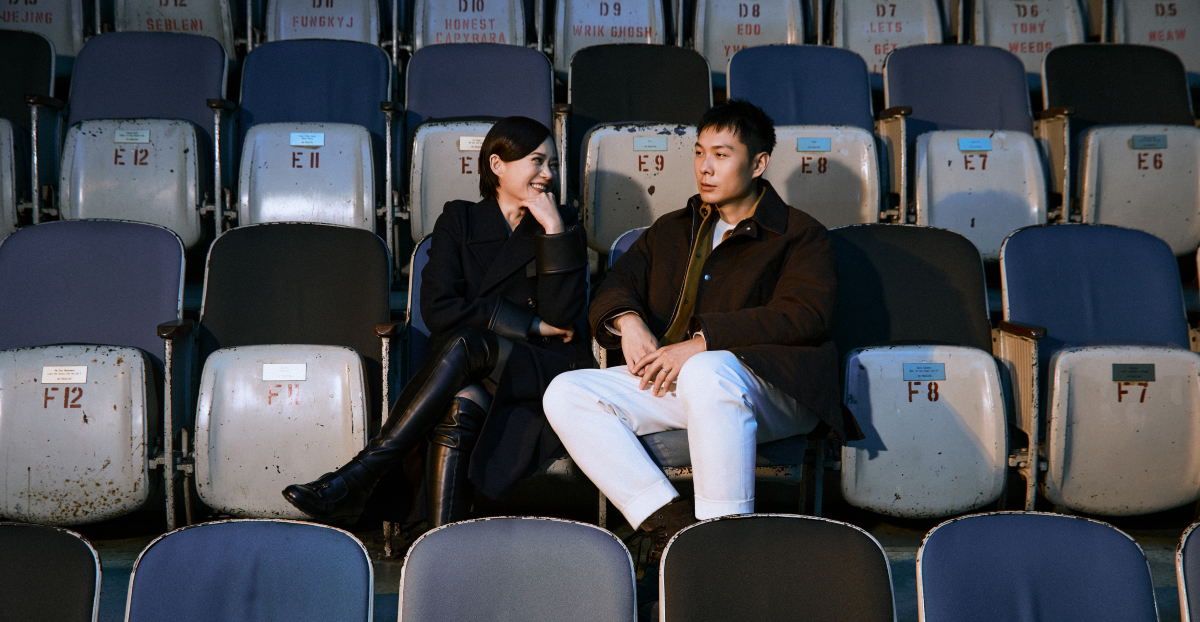
There is something comforting about the way Anthony Chen and Yeo Yann Yann interact with each other. The familiarity they share reminds you, perhaps, of your own friendships, the kind made more precious with by the passing of time and mutual respect.
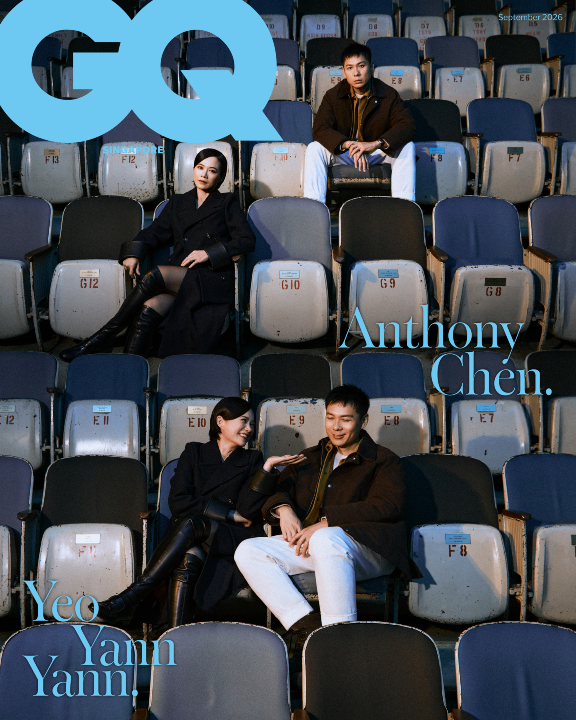
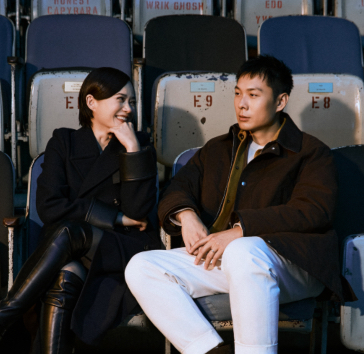
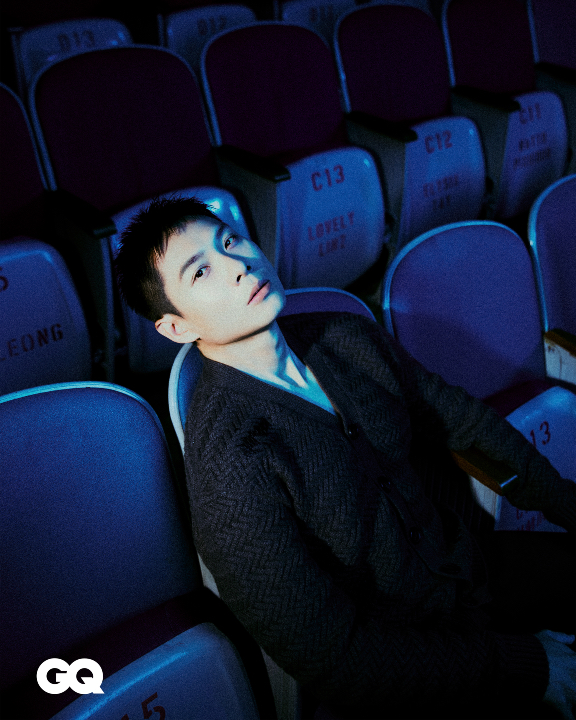
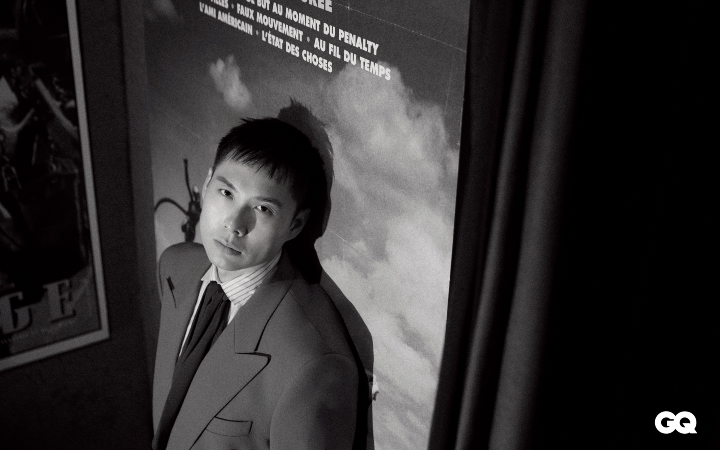
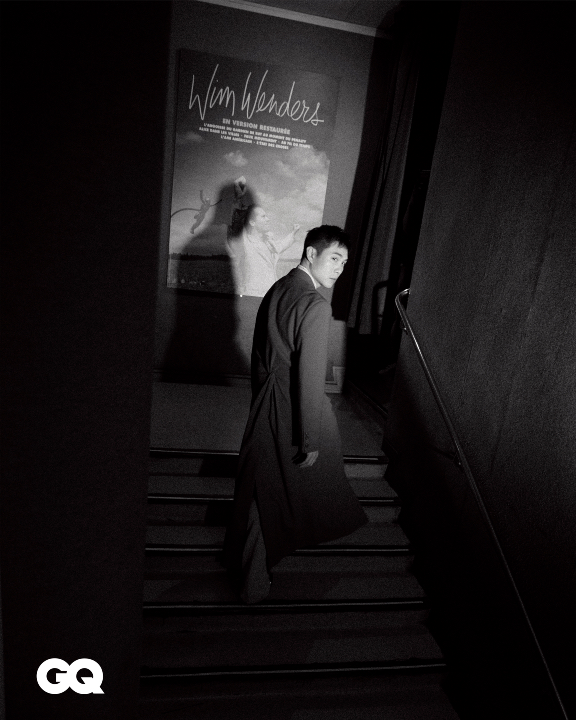
We are at the Filmhouse, an independent arthouse cinema dedicated to Singapore’s film community. Situated within the iconic Golden Mile Tower, its nostalgic and communal atmosphere provides the perfect backdrop for capturing not only who Chen and Yeo are professionally — he, an acclaimed director and bright light of Singapore cinema; she, an award-winning actress with nearly 30 years in the industry — but also the enduring partnership between them.
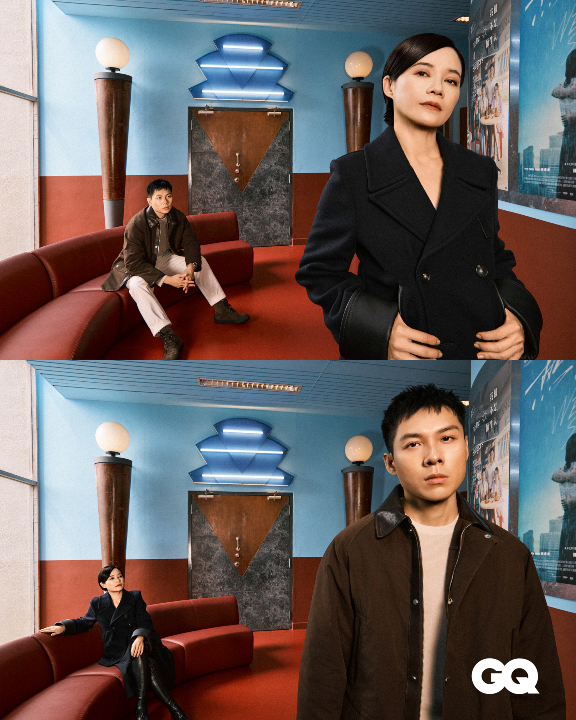
On Anthony: Jacket, shirt, T-shirt and boots, Tod’s.
Nearly two decades on, that partnership has only grown richer with time. Chen and Yeo first collaborated in 2007 on the short film Ah Ma, a project that would eventually spark an artistic kinship. Their eyes light up as they recount at an anecdote they never tire of sharing: Chen remembers he was still in National Service when he directed the film. Yeo, on the other hand, recalls being struck by how he had seemed to possess a maturity far beyond his years. “He was this young man who had a very interesting take on life. He said, ‘Sometimes, you don’t need tears to represent sadness.’ I really liked that,” she says.
Now, their long-running collaboration arrives in the form of We Are Not Strangers, the concluding chapter in Chen’s “Growing Up” trilogy. The new release comes after the critically acclaimed Ilo Ilo and Wet Season, and reunites them with another longtime collaborator, actor Koh Jia Ler.
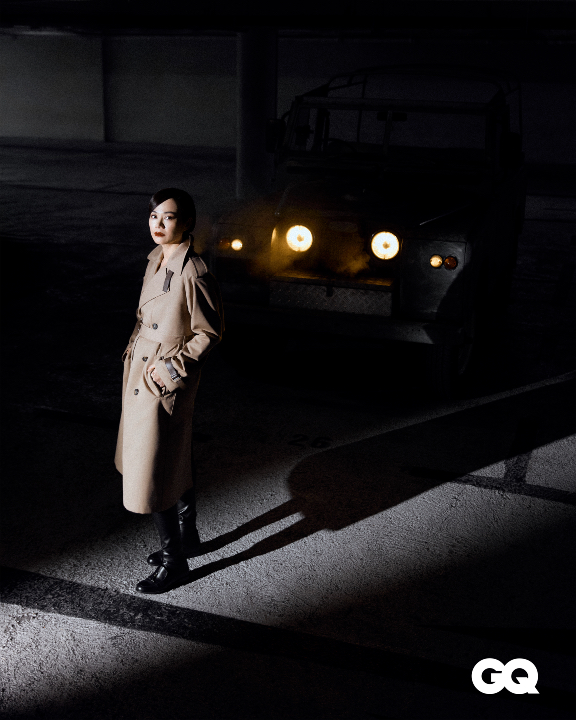
In We Are Not Strangers, Chen examines the weight of responsibility, the changing shape of family, and the passage of life in Singapore. “Jia Ler says I nag more since becoming a father — his words, not mine — and that I nag at him more than I do my own son. But so much of my work is informed by my own life and personal emotions,” Chen offers. “You see that in We Are All Strangers. It’s a story about a boy becoming a man, taking on duty and responsibility, learning to be a father. It’s very much about my own coming-of-age over the past couple of years.”
Chen also funnels the exploration of the film’s themes through Lee Bee Hwa, a vivacious coffee shop beer lady from Malaysia played sublimely by Yeo. “We seldom look at immigrants in our creative world today, and I think Bee Hwa occupies a very valid place in this country,” she says. “You want to stay here, but you might not be as lucky. You might not have the same educational background. You want this country to be good; you want yourself to be good. And sometimes, you just have to confront the very real problems that we face. And I don’t think Bee Hwa is an individual case. I think many, many people who work in Singapore actually face the same kind of problems.”
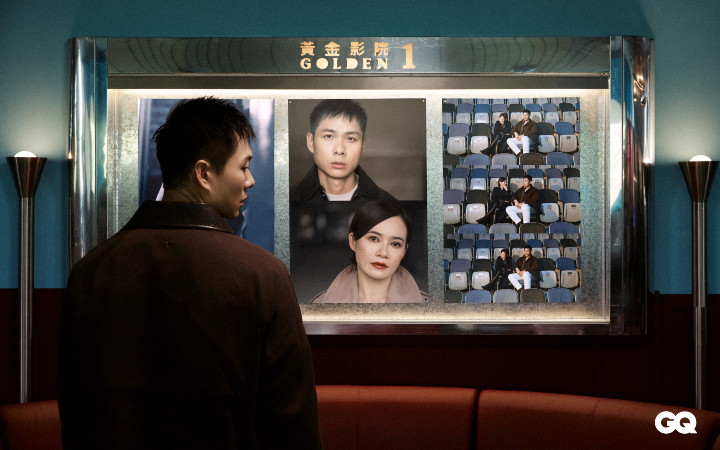
On Anthony: Jacket, shirt,T-shirt, trousers and boots, Tod’s.
Like many untold stories, time has a way of bringing the unseen into focus. For Chen and Yeo, years of working together have brought them onto the same page, whether through their craft or the way they see each other. Here, they discuss their craft and the instinctive chemistry that shapes their work together.
What do years of working together reveal that you couldn’t see at the beginning?
Anthony Chen: In the beginning, you see a collaborator. After a decade, you see a person. And that changes everything because you’re no longer just directing an actor. You’re having a conversation with someone you truly know. With Yann Yann, I’ve learnt to sense when she’s pushing herself too hard, when she’s hit a ceiling on a certain day and we should maybe call it a day. And that takes time — years, actually — because you can’t rush that kind of intimacy. It’s not something you can achieve in one production. It’s built across shared meals, long waits on set, conversations that have nothing to do with the film, moments of exhaustion and exhilaration.
Yeo Yann Yann: We’ve definitely seen each other’s growth. You know, we’ve been through the highest, brightest moments, but also the lowest points. There was a kind of anxiety, a kind of pain, that we experienced while filming. Where did that pain come from? It always came from how much we wanted to achieve, and from how we wanted the character to come across on screen.
Whenever you work with someone from before, do you bring the old relationship into the new work, or do you deliberately try to forget it?
YYY: Every time we come back to work together, it’s really like starting from zero again. But the communication and familiarity remain. Sometimes, even before we start talking, we already understand what the other person wants — what you want as a director, and how, as an actor, I can communicate my thoughts to you.
AC: On one hand, I don’t think you can erase history. The old relationship is there. It’s embedded in the shorthand you’ve developed, the trust you’ve earned, the memories of past struggles and triumphs. That history is a kind of capital you can draw from. But at the same time, I do try to actively unlearn certain assumptions. Because it’s dangerous to assume that because someone did something a certain way ten years ago, they do it the same way now. People change. Their instincts shift. Their life experiences reshape them.
How has your purpose behind your filmmaking evolved?
AC: It has changed enormously. Early on, there was an undeniable drive for recognition and validation. But over time, that’s fallen away. Now it feels much simpler. I’m also sick and tired of the endless anxiety and pain that I experience when I make my films. Hence these days, I want to find joy in the work itself. And I want to bring that same joy to my audiences. Already, the world is quite a terrible place, so I don’t want my cinema to just be miserable and depressive. That’s really become an objective now. Which is why you will find a lot of humour in We Are All Strangers.
Acting is about observation. You’ve talked about how you collect fragments of human behaviour. What makes you look twice at a stranger?
YYY: You know that state when we’re completely relaxed and not thinking? When you’re zoning out? I think that’s when you release the real colour of who you are. That’s when I want to look twice at somebody.
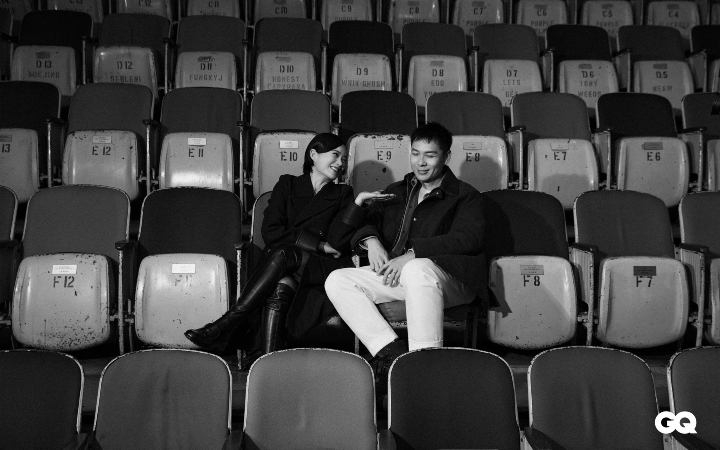
On Anthony: Jacket, shirt, T-shirt, trousers and boots, Tod’s.
What character would you like to play next?
YYY: Id like to play an autobiographical character. It’s very challenging because you have to learn all the little gestures and nuances you might need from this person. And that’s very exciting to me. I’d also like to play a historical heroine. We do not sing the praises of these women enough.
How do you tell the story of Singaporean identity without reducing it to clichés?
AC: I’ll always have my own blind spots, of course. But the only way I approach Singapore stories, or any story, really, is to try not to bring judgment into the process. I don’t judge my characters or their decisions. It’s important that I don’t come from a place of moral superiority, looking down upon them. I empathise with their flaws. I believe that everyone is trying to be a better person, it’s just that their weaknesses and flaws get in the way. That is how I write all my characters, Singaporean or not.
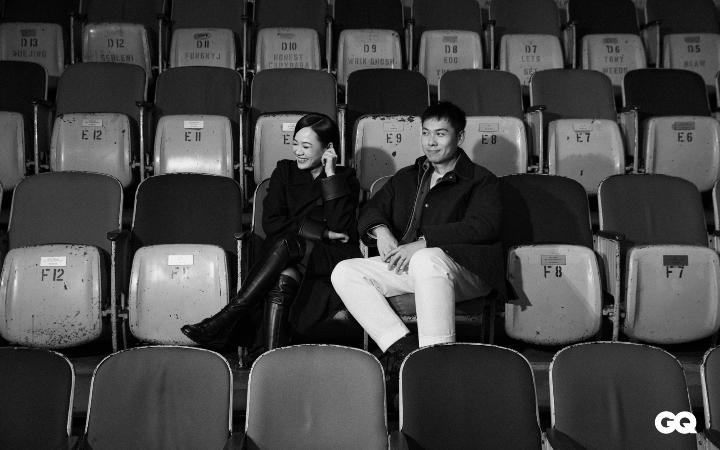
On Anthony: Jacket, shirt, T-shirt, trousers and boots, Tod’s.
Have you thought about what you’d be doing if not for acting?
YYY: My parents didn’t like the idea of me becoming a performer. They didn’t agree with my decision to work in the arts. I came to Singapore all by myself, without any support. I had to rent my own place and figure things out for myself. It took me about 10 years of really struggling and doing everything I could just to continue. But at the time, I couldn’t say that I loved acting. I couldn’t even use the word ‘love’. I liked it. I enjoyed it. But it was only later in my life that I loved being an actor.
I thought I could be a salesperson. I’m probably not too bad at talking, and I could probably convince people. But I’m too professional — I couldn’t bear to push something onto someone. Eventually, I decided that I wanted to make this my career, because I love it.
Have the narratives you explore in your work influenced how you live your life?
AC: I often feel like my films are an apology for my flaws in life. I put my fears and vulnerabilities into my works, things I struggle to express otherwise. But I always try to be a better human being, in spite of my weaknesses. I tell my friends I’m probably too proud, and too Asian, to seek therapy. Filmmaking, in its own way, has become my therapy. It forces me to confront what I’d rather avoid.
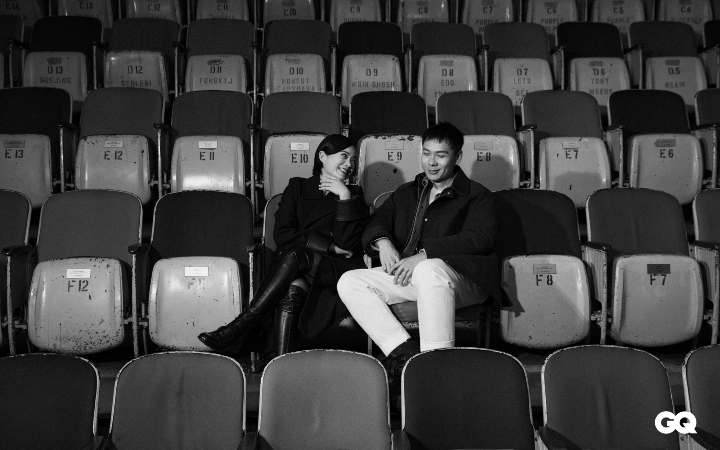
On Anthony: Jacket, shirt, T-shirt, trousers and boots, Tod’s.
Looking back, what was the biggest takeaway you had from working on We Are All Strangers?
AC: That there is so much kindness and goodwill in Singapore. We met so many strangers during production who supported us in different ways, offering their homes, their time, their help. We often lament that Singapore is losing its kampung spirit, but it’s still there.
To bring out the best in others, it always begins with bringing out the best in yourself. Like so many others, it’s probably a Singaporean thing. In the past, I always found myself slagging off my country. But this time, I found so much beauty in Singapore during the making of this film, not just in the places we shot, but in the people we met along the way.
Photography Zhang Minhua / Telescope Studios
Editorial Director Jumius Wong
Creative Direction and Styling Jenine Oh
Grooming for Anthony Chen Sha Shamsi
Hair and Makeup for Yeo Yann Yann Kat Zhang / Suburbs Studio
Creative Producer Rena Kok
Photographer’s Assistants McDouglas Lim and Kerine Chia
Stylist’s Assistants Kevin Tew and Ephrem Don Bonafe
Fashion Tod’s
Location Filmhouse
Cover Stars Anthony Chen and Yeo Yann Yann